
Cross-Chain BridgesTested10 OCT 26

Stargate Finance Review
One-transaction transfers of native USDC, USDT and ETH between major EVM chains
Affiliate link · doesn't affect score · independent methodology
4.1/ 5Skrumble Score
At a glance
Stargate moves native USDC, USDT and ETH out of shared liquidity pools and issues minted Hydra tokens on chains without a pool. Its docs list 46 chains with contracts (18 pool chains, 28 Hydra chains) and no Solana. Every transfer now goes by Stargate Taxi, about 1 minute on average. LayerZero has owned it since August 2025, and STG converts to ZRO until 15 December 2026.
Best for
Moving native USDC, USDT or ETH between large EVM chains in one transaction.
Skip if
You need Solana, or you want a bridge whose owner cannot adjust pool credits without LayerZero verification.
Skrumble scoring breakdown
4.1/ 5
Security & Audits (35% weight)4.0/5
Transaction Speed (20% weight)4.4/5
Fees (20% weight)4.0/5
Chains & Tokens Coverage (15% weight)4.2/5
Reliability (10% weight)3.8/5
Read our full scoring methodology.
Pros
- Pool chains pay out native USDC, USDT and ETH, not wrapped copies
- Stargate Taxi transfers average about 1 minute (L2BEAT)
- No protocol exploit on DefiLlama; only a $43,000 phishing case in December 2023
- Stargate V2 audited by Zellic and OtterSec
Cons
- Value locked fell from $504M to $100M in a year; chains and pools cut in 2026
- Since a June 2026 upgrade the owner can adjust pool credits without LayerZero verification
- STG converts to ZRO only until 15 December 2026
- No Solana support
Quick stats
- Supported chains
- 46+
- Typical fee
- Dynamic per route, shown in the app
- Avg. speed
- About 1 minute (Taxi average, L2BEAT)
At A Glance
Who Is Stargate Finance Best For?
Best for: DeFi users seeking fast, secure cross-chain asset transfers with native token support and competitive fees across multiple blockchains.Our Take
Skip if: You only need basic bridging for one or two specific networks, prefer completely decentralized governance structures, or want extensive asset variety beyond major cryptocurrencies. Stargate Finance stands out for one-transaction transfers of native USDC, USDT and ETH between major EVM chains. Its docs list contracts on 46 chains: on its 18 pool chains you receive the native asset rather than a wrapped token, and on 28 Hydra chains it mints a token instead. Solana is not supported. However, Stargate is shrinking. Its value locked fell from $504 million to $100 million in a year (DefiLlama, 9 October 2026), it removed chains and pools in 2026, and since LayerZero bought the protocol in August 2025 the STG token is being retired (it converts to ZRO only until 15 December 2026). Limited asset variety compared to some competitors may also concern certain users.Skrumble Scoring Breakdown
Our scoring reflects Stargate's clean exploit record and native-asset pools, balanced against its shrinking liquidity, the owner's power to adjust pool credits and limited asset diversity compared to some competitors. See our full crypto bridge scoring methodology here.What is Stargate Finance and How Does it Work?
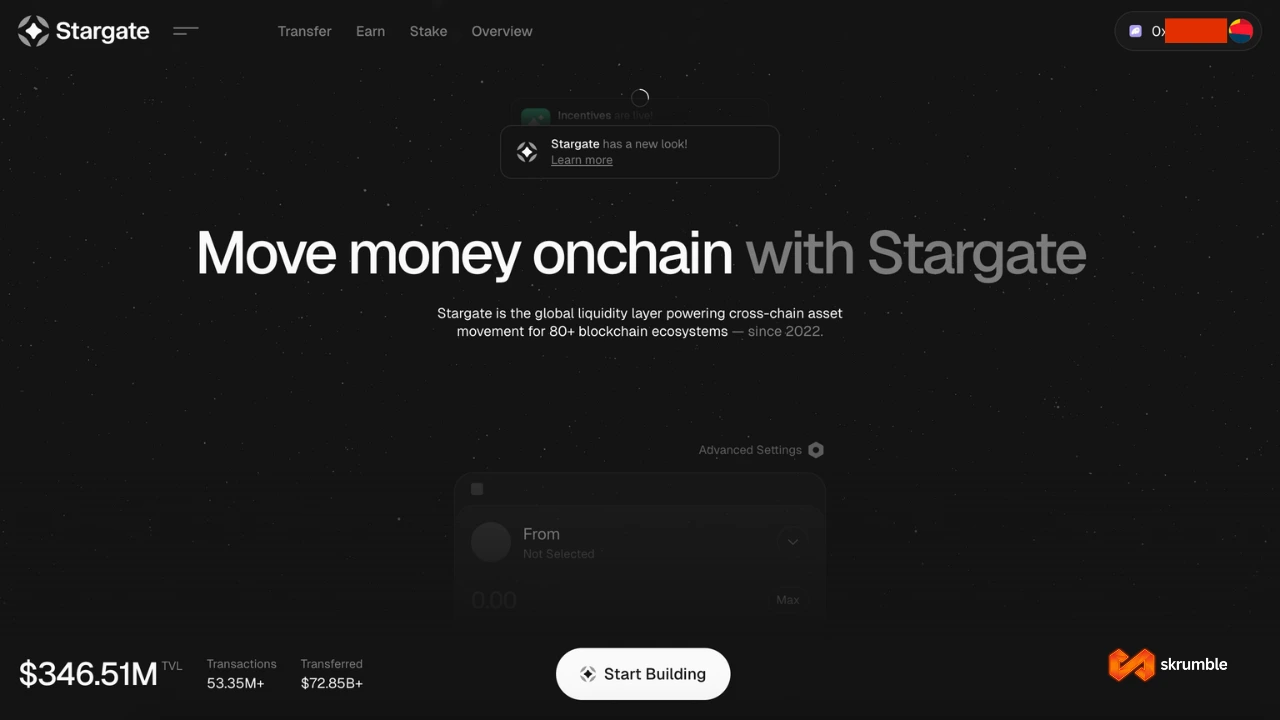 Stargate Finance is a liquidity bridge built on LayerZero messaging that lets users transfer assets between different blockchains and layer-2 networks in one transaction. Since 1 October 2026 every transfer goes by Stargate Taxi, which averaged about one minute on L2BEAT.
Unlike bridges that split liquidity into separate pools for each route, Stargate keeps unified liquidity pools for USDC, USDT and ETH, so on its pool chains you receive the native asset rather than a wrapped copy. On chains without a pool, its Hydra system uses lock-and-mint instead and you receive a minted token.
The protocol uses the Delta Algorithm to maintain balanced liquidity across chains. This algorithm dynamically allocates liquidity across various public chains while maintaining soft-partitioned liquidity pools on each chain.
Stargate Finance is a liquidity bridge built on LayerZero messaging that lets users transfer assets between different blockchains and layer-2 networks in one transaction. Since 1 October 2026 every transfer goes by Stargate Taxi, which averaged about one minute on L2BEAT.
Unlike bridges that split liquidity into separate pools for each route, Stargate keeps unified liquidity pools for USDC, USDT and ETH, so on its pool chains you receive the native asset rather than a wrapped copy. On chains without a pool, its Hydra system uses lock-and-mint instead and you receive a minted token.
The protocol uses the Delta Algorithm to maintain balanced liquidity across chains. This algorithm dynamically allocates liquidity across various public chains while maintaining soft-partitioned liquidity pools on each chain.
Stargate Finance Review: Unique Features
Governance After the LayerZero Acquisition
Stargate used to give STG stakers veSTG (vote-escrowed STG) voting power over the protocol. That model no longer applies, because Stargate DAO holders approved LayerZero's acquisition in August 2025, with nearly 95% voting For, and the Stargate DAO was dissolved. Stargate now operates within LayerZero. STG holders can convert to ZRO at 0.08634 ZRO per STG until 15 December 2026.Cross-Chain Transfer Process
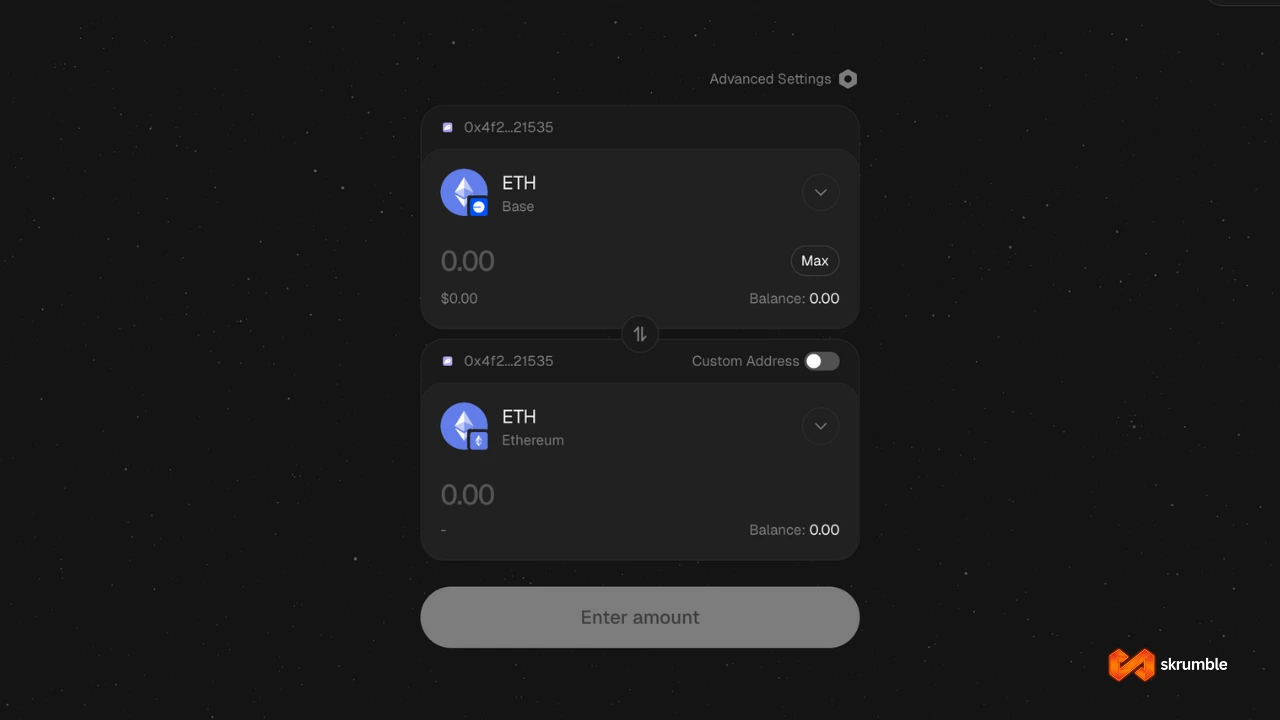 The user experience prioritizes simplicity:
- Select Source Chain: Choose your current blockchain
- Select Destination Chain: Pick target network
- Enter Amount: Specify transfer quantity
- Review Fees: Dynamic fees are calculated by the AI Planning Module on a per-pathway basis
- Execute Transfer: Confirm one transaction; Stargate Taxi delivers it in about one minute on average
Liquidity Provision
Users can provide stablecoin liquidity to Stargate's pools. The STG emissions and flat fee split described in earlier versions of this review no longer apply, because STG is being retired and Stargate V2 sets fees per route. We have not verified current liquidity provider rewards, so check the pool in the app before you deposit.Cryptocurrencies Available on Stargate Finance
Stargate Finance's shared pools hold USDC, USDT and ETH, and on Hydra chains it issues OFTs (Omnichain Fungible Tokens) instead. The protocol focuses on major, high-liquidity assets rather than extensive altcoin support.Networks Available on Stargate Finance
Stargate's docs list V2 mainnet contracts on 46 chains (18 pool chains and 28 Hydra chains); Solana is not among them. Pool chains include:- Ethereum, BNB Chain, Polygon, Avalanche
- Arbitrum, Optimism, Base, Linea
- Mantle, Scroll, Sonic, Unichain, Soneium
- Unsupported chains removed on 28 April 2026 (L2BEAT)
- Several remote pools deprecated on 24 September 2026, so check that your chain and token are still listed before you bridge
Fees
Current Stargate docs do not state a flat 0.06% fee. Fees are dynamic and set by the AI Planning Module on a per-pathway basis. A transfer out of a pool can pay a treasury fee or earn a rebalancing reward, and a Hydra transfer can pay a treasury fee. The app shows the fee for your route before you confirm; Stargate's public quote API is deprecated, so we could not capture an independent quote. Additional Fees:- Rebalancing Fees: Dynamic fees based on liquidity pool imbalances
- Gas Fees: Network-specific costs (varies by blockchain)
Is Stargate Finance Safe?
Stargate V2 was audited by Zellic and OtterSec, and the original V1 contracts by Quantstamp, Zokyo, Zellic and Ackee. DefiLlama lists no protocol exploit; the only incident it records is a $43,000 social-engineering phishing case in December 2023. Security Features:- LayerZero V2 Verification: Decentralized verifier networks (DVNs) check each message. Stargate's docs name the Stargate DVN and Nethermind; a required DVN was added on 21 May 2026, and the current verifier count is not documented
- Admin Multisig: A 5-of-7 multisig administers the contracts (L2BEAT)
- Bug Bounty Program: Merged into LayerZero's program; LayerZero raised its V2 bounty to $3.5 million
- Owner Powers: Changes no longer go through a DAO vote. Since a June 2026 upgrade the owner can adjust pool credits without LayerZero verification, and on 1 October 2026 it minted credits manually while deprecating pools (L2BEAT)
Stargate Finance Native Token (STG)
STG was Stargate's governance token, also used for staking, fee sharing and liquidity mining rewards; those uses no longer apply now that the Stargate DAO has been dissolved. Major Development: Stargate DAO holders approved LayerZero's acquisition in August 2025, with nearly 95% voting For, in a deal worth about $120 million in ZRO; Wormhole had made a late $120 million counter-bid. STG converts to ZRO at 0.08634 ZRO per STG until 15 December 2026.Things We Do Not Like about Stargate Finance
Limited Asset Selection: Stargate focuses on major cryptocurrencies, restricting users wanting to bridge smaller altcoins or experimental tokens. Shrinking Liquidity: Value locked fell from $504 million to $100 million in a year (DefiLlama, 9 October 2026), and Stargate removed chains and pools in 2026. Owner Control: LayerZero has owned Stargate since August 2025, and since a June 2026 upgrade the owner can adjust pool credits without LayerZero verification. Ethereum Gas Dependency: High fees on Ethereum can make small transfers cost-prohibitive. LayerZero Dependency: The protocol's reliance on LayerZero infrastructure creates potential single points of failure. Complex Architecture: Technical complexity may create barriers for some users compared to simpler crypto bridge solutions.Recent Developments
LayerZero Acquisition Approved: Stargate DAO holders approved the acquisition in August 2025 with nearly 95% voting For. STG converts to ZRO at 0.08634 ZRO per STG until 15 December 2026. Chain and Pool Cuts: Stargate removed unsupported chains on 28 April 2026 and deprecated several remote pools on 24 September 2026 (L2BEAT). Taxi Only: Bus mode ended, and since 1 October 2026 every Stargate transfer is delivered by Stargate Taxi.Skrumble Community Ratings
We're building our Stargate Finance review section! Share your experience to help others, particularly regarding:- Your experience with cross-chain transfers and transaction speeds
- How fees compare to other bridge protocols
- Any issues with supported networks or asset transfers
- User interface quality and ease of use
- Customer support responsiveness and helpfulness
Conclusion
Stargate Finance delivers on its promise of one-transaction transfers of native assets between major EVM chains, and DefiLlama records no protocol exploit, only a $43,000 phishing case in December 2023. Its docs list contracts on 46 chains, and Stargate Taxi transfers averaged about one minute on L2BEAT. However, Stargate is shrinking under LayerZero's ownership, with value locked down 80% in a year and chains and pools cut in 2026, and limited asset variety remains a notable limitation. The protocol excels for users needing reliable transfers of major cryptocurrencies but may disappoint those seeking diverse token support, Solana routes or decentralized governance.FAQs
Who is Behind Stargate Finance?
+ Stargate Finance was built by LayerZero Labs and launched in March 2022. In August 2025 Stargate DAO holders approved its acquisition by LayerZero Foundation, so Stargate now operates within LayerZero and the Stargate DAO has been dissolved.What Chains are Supported by Stargate Finance?
+ Stargate's docs list V2 contracts on 46 chains: 18 pool chains, including Ethereum, BNB Chain, Arbitrum, Optimism, Avalanche, Polygon, Base and Linea, plus 28 Hydra chains. Solana is not supported.What is the Purpose of STG in Crypto?
+ STG was Stargate's governance token, also used for fee sharing and liquidity incentives. Since the LayerZero acquisition the Stargate DAO has been dissolved, and STG converts to ZRO at 0.08634 ZRO per STG until 15 December 2026.What is the Delta Algorithm in Stargate Finance?
+ The Delta Algorithm dynamically allocates liquidity across various public chains, maintaining soft-partitioned liquidity pools on each chain while ensuring native compatibility.What Happened After the LayerZero Acquisition Passed?
+ Stargate DAO holders approved the acquisition in August 2025 with nearly 95% voting For. The Stargate DAO was dissolved, STG staking no longer applies, and STG holders can convert to ZRO at 0.08634 ZRO per STG until 15 December 2026.Risk Warning:
Trading Forex, CFDs, and cryptocurrencies carries a high level of risk and may not be suitable for all investors. These markets are volatile and can result in the loss of your invested capital. Make sure you fully understand the risks before trading.Screenshots captured during testing