
Cross-Chain BridgesTested10 OCT 26

Portal Bridge Review
Wormhole's bridge for Solana, Sui, Algorand, Near and other non-EVM chains
Affiliate link · doesn't affect score · independent methodology
3.9/ 5Skrumble Score
In sintesi
Portal connects Ethereum and other EVM networks with Solana, Sui, Algorand, Near and further non-EVM chains. Transfers need signatures from 13 of Wormhole's 19 Guardians, and the app also routes native USDC through Circle's CCTP and swaps through Mayan. Jump Crypto covered the 2022 loss of 120,000 wETH the next day.
Ideale per
Moving assets between EVM chains and Solana, Sui, Algorand, Near or other non-EVM chains.
Evita se
You need transfers to land in seconds (standard routes take minutes), or your chain is one Wormhole has retired since 2025.
Dettaglio punteggio Skrumble
3.9/ 5
Security & Audits (35% peso)3.8/5
Transaction Speed (20% peso)3.3/5
Fees (20% peso)4.0/5
Chains & Tokens Coverage (15% peso)4.5/5
Reliability (10% peso)4.1/5
Leggi la nostra metodologia di punteggio completa.
Pros
- Reaches non-EVM chains such as Solana, Sui, Algorand and Near
- 13-of-19 Guardian quorum, plus Governor and Global Accountant controls
- 29 third-party audits listed by Wormhole
- Native USDC via Circle's CCTP and swaps powered by Mayan
Cons
- February 2022 exploit: 120,000 wETH (about $326M), replaced by Jump Crypto the next day
- The lock-and-mint token bridge delivers wrapped tokens, not the native asset
- Chains retired since 2025, including Fantom, Scroll, Berachain and Injective
- Standard routes wait for source-chain finality, so transfers take minutes
Statistiche rapide
- Supported chains
- 30+
- Typical fee
- Shown in the quote, plus gas on both chains
- Avg. speed
- Minutes, route-dependent
At A Glance
Who Is Portal Bridge Best For?
Best for: Users moving assets between EVM networks and non-EVM chains like Solana, Sui, Algorand and Near (Portal claims 30+ chains in total). Skip if: You need a transfer to land in seconds (standard routes wait for the source chain to finalise, so they take minutes), or your chain is one Wormhole has retired since 2025.Our Take
In our review of Portal Bridge, we found a protocol that connects Ethereum, BNB Chain and other EVM networks with non-EVM chains such as Solana, Sui, Algorand and Near. Besides Wormhole-wrapped tokens, the app routes native USDC through Circle's CCTP and token swaps through Mayan, which makes it particularly valuable for users who hold assets across several ecosystems. However, there are trade-offs. Standard transfers wait for the source chain to finalise, so they take minutes rather than seconds, and Wormhole has retired a string of chains since 2025. The February 2022 exploit, in which an attacker minted 120,000 wETH (about $326 million), still weighs on the security score, even though Jump Crypto replaced the funds the next day and DefiLlama lists no Wormhole exploit since. For users who need non-EVM reach more than speed, Portal Bridge is a solid choice. Check that your chain is still listed before you bridge.Skrumble Scoring Breakdown
Portal Bridge scores best on chain coverage and worst on speed, because standard routes wait for the source chain to finalise. Its security score weighs the 13-of-19 Guardian quorum and 29 audits against the 2022 exploit. See our full crypto bridge scoring methodology here.What is Portal Bridge and How Does it Work?
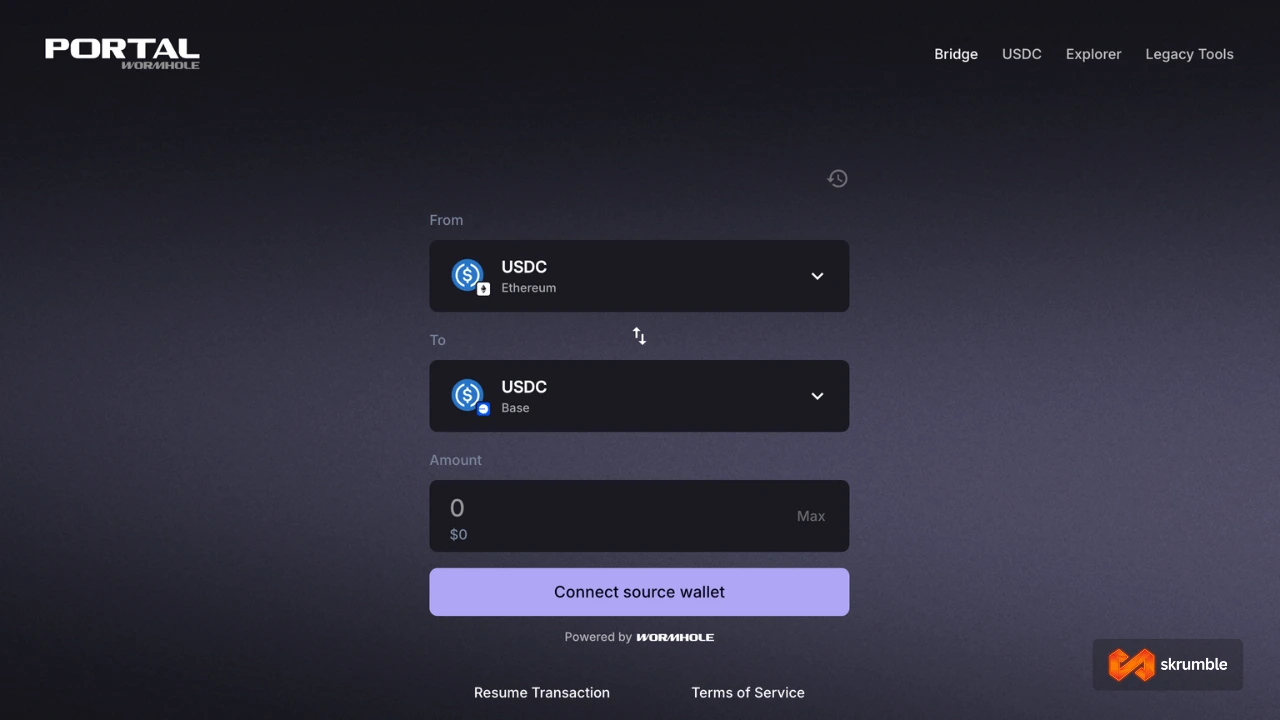 Portal Bridge operates as a cross-chain interoperability protocol built on the Wormhole messaging layer, facilitating asset transfers across what Portal says are 30+ blockchain networks, including EVM-compatible chains like Ethereum and BNB Chain, and non-EVM networks such as Solana, Sui, Algorand and Near.
The protocol employs a lock-and-mint mechanism where source tokens are locked in smart contracts while equivalent wrapped tokens are minted on the destination chain. This process is overseen by a 19-Guardian network that approves cross-chain transfers, and 13 of the 19 Guardians must sign each one.
Portal Bridge operates as a cross-chain interoperability protocol built on the Wormhole messaging layer, facilitating asset transfers across what Portal says are 30+ blockchain networks, including EVM-compatible chains like Ethereum and BNB Chain, and non-EVM networks such as Solana, Sui, Algorand and Near.
The protocol employs a lock-and-mint mechanism where source tokens are locked in smart contracts while equivalent wrapped tokens are minted on the destination chain. This process is overseen by a 19-Guardian network that approves cross-chain transfers, and 13 of the 19 Guardians must sign each one.
The Transfer Process
When you initiate a transfer through Portal Bridge:- Token Locking: Your tokens are locked in a smart contract on the source chain
- Message Verification: The Guardian network validates the transaction across multiple nodes
- Token Minting: Wrapped versions of your tokens are minted on the destination chain
- Wrapped Output: On this route you receive a Wormhole-wrapped token; for native USDC, pick the CCTP route instead
Unique Features
Native USDC, NTT Tokens and Portal Swap
Besides the lock-and-mint token bridge, the Portal app offers routes that deliver the native asset rather than a wrapped copy:- Native USDC: routed through Circle's CCTP, which burns USDC on the source chain and has Circle mint native USDC on the destination
- NTT tokens: tokens issued with Wormhole's Native Token Transfers framework arrive as the native token
- Portal Swap: token swaps powered by Mayan, announced in October 2025
Multi-Chain Architecture
Unlike bridges limited to EVM chains, Portal Bridge's Wormhole integration enables transfers between fundamentally different blockchain architectures, making it particularly valuable for users operating across diverse DeFi ecosystems.Supported Networks and Assets
Blockchain Networks (30+)
Portal says it supports 30+ chains. On 9 October 2026, DefiLlama showed Portal holding funds on 13 chains, including Ethereum, Algorand, BNB Chain, Solana, Sui and Near. Retired networks: Wormhole has dropped a string of chains since June 2025, including XPLA and Oasis (6 June 2025), Terra Classic, Terra, Karura and Acala (Portal transfers ended 14 July 2025), X Layer and Mantle (September 2025), Fantom (October 2025), Scroll (21 April 2026), Berachain (31 August 2026) and Injective (30 September 2026). Check that your chain is still listed in the app before you bridge.Asset Coverage
Portal's site claims 100+ supported tokens, including:- Wrapped tokens: Wormhole-wrapped versions of tokens locked on the source chain
- Native USDC: through Circle's CCTP
- tBTC and NTT tokens: supported as separate routes in the Portal app
Portal Bridge Fees Structure
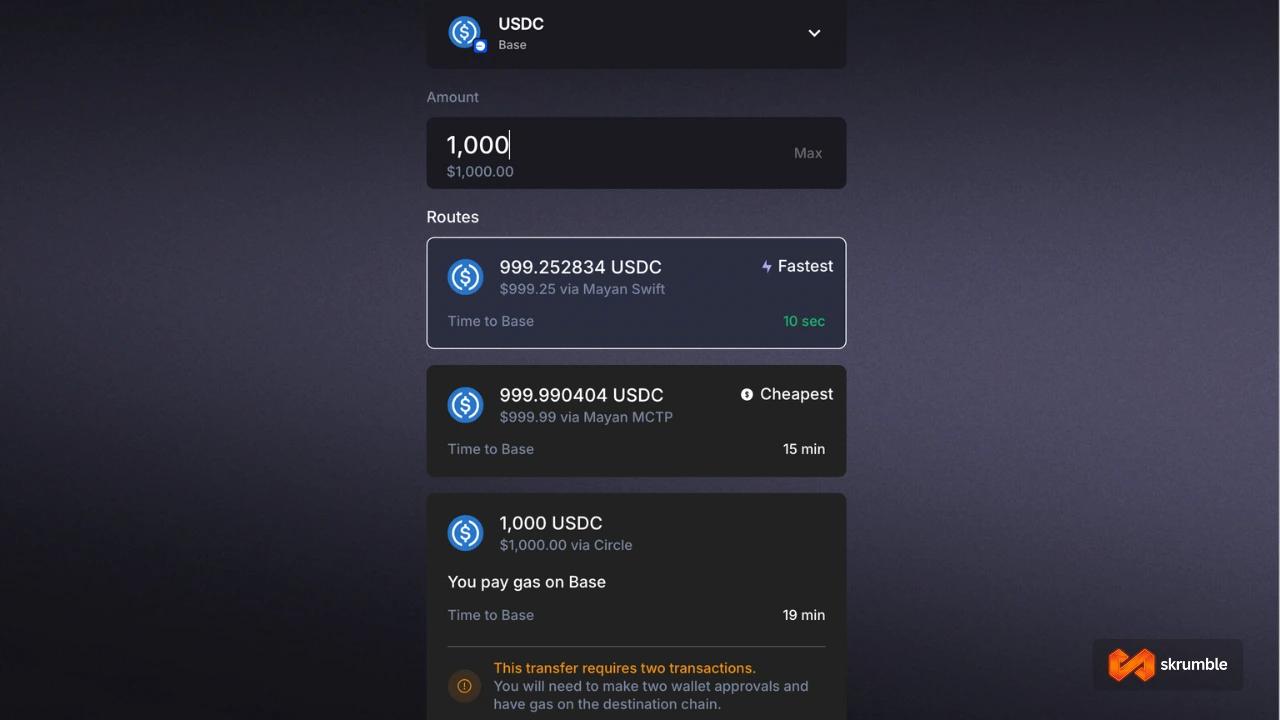 Wormhole's current docs give no fixed fee amounts for Portal, so the fee for your route is shown in the quote before you confirm. What you pay is made up of:
Bridge Fees
- Quoted fee: Varies by route and is shown in the app before you sign
- Relayer fee: Relayed (automatic) routes add a fee that reimburses the relayer completing the transfer
Additional Costs
- Source Chain Gas: Network fees for initiating transfers
- Destination Chain Gas: Network fees for claiming tokens
- Ethereum gas: about 0.1 gwei on 9 October 2026, so the Ethereum leg of a transfer cost cents
- Portal fee: shown in the quote for your route, so check the total in the app before you confirm
Security Analysis
Current Security Measures
Portal Bridge's security setup includes:- 29 Third-Party Audits: Including evaluations by CertiK, Neodyme, and Kudelski
- 19-Guardian Network: 13 of the 19 Guardians must sign each transfer message
- Global Accountant: An extra supply check on token transfers
- Governor: Tracks token flows and delays suspicious transfers
Security History
February 2022 Hack: On 2 February 2022 an attacker bypassed signature verification in Wormhole's Solana contract and minted 120,000 wETH (about $326 million). Jump Crypto replaced the 120,000 ETH the next day, so users were made whole. The incident involved:- Injection of spoofed Guardian signatures
- Unauthorized minting of 120,000 wETH tokens
- 93,750 ETH of it bridged out to Ethereum
- DefiLlama lists no Wormhole or Portal exploit from 2023 to October 2026
- Wormhole runs a bug bounty on Immunefi
Staking and Liquidity
Portal Bridge operates differently from traditional DeFi protocols regarding user participation: Guardian Network: The protocol's security depends on its 19 Guardian nodes, not on staking by users. No Liquidity or Validator Roles: Individual users cannot participate in:- Liquidity provision for fee earnings
- Validator node operation
User Experience Considerations
Interface and Usability
Portal Bridge provides a straightforward web interface for basic transfers, though newcomers should check whether a route delivers a wrapped token or the native asset before they confirm. The older Portal Legacy interface closed on 30 June 2026, so use portalbridge.com.Wallet Compatibility
The platform supports major wallets including:- MetaMask (EVM chains)
- Phantom (Solana)
Customer Support
Portal Bridge provides:- Comprehensive documentation
- Community Discord support
- Recovery workflows for failed transactions
Comparison with Competitors
| Feature | Portal Bridge | Stargate Finance | Across Protocol |
| Networks | 30+ (Portal's claim) | 46 with contracts; no Solana | 20+, incl. Tron and BNB Chain |
| Fees | Shown in the quote | Dynamic per route | 0.107 USDC on 1,000 USDC, Ethereum to Arbitrum (9 Oct 2026) |
| Speed | Minutes, route-dependent | About 1 minute (Taxi average) | About 2 seconds, Ethereum to Arbitrum |
| Native Assets | Wrapped on the token bridge; native USDC via CCTP | On pool chains; minted tokens on Hydra chains | ✅ |
| Non-EVM Chains | ✅ | No Solana | Tron, plus Solana via CCTP |
Things We Do Not Like About Portal Bridge
Our review found several persistent challenges: Wrapped Tokens on the Main Route: The lock-and-mint token bridge delivers Wormhole-wrapped tokens, not the native asset. Native USDC needs the CCTP route, so check the received token before you confirm. Retired Chains: Wormhole has retired networks such as Fantom, Scroll, Berachain and Injective since 2025, so a route you used before may no longer exist. Guardian Centralization: While distributed, the 19-Guardian model introduces potential single points of failure compared to more decentralized validation mechanisms. Limited DeFi Integration: Compared to competitors, Portal Bridge offers fewer direct integrations with DeFi protocols and yield farming opportunities. Security Perception: Despite security improvements, the significant 2022 hack continues to impact user confidence and adoption rates.Conclusion
Portal Bridge is our pick for moving assets to and from Solana and other non-EVM chains such as Sui, Algorand and Near, across what Portal says are 30+ networks in total. However, wrapped tokens on the main route, transfers that take minutes and the 2022 exploit may deter users prioritizing simplicity and maximum trust. The protocol best serves experienced DeFi users who value broad network access over operational simplicity. For users operating across diverse blockchain ecosystems, particularly those involving Solana, Sui or other non-EVM networks, Portal Bridge provides capabilities that few other crypto bridges can match.Skrumble Community Ratings
We're building our Portal Bridge review section! Share your experience to help others, particularly regarding:- Your experience with different blockchain networks
- How fees compare to other cross-chain bridges
- Transaction completion times and any delays
- Whether you received wrapped or native tokens
- Support quality and documentation helpfulness
FAQs
What is Portal Bridge?
+ Portal Bridge is a cross-chain protocol built on Wormhole messaging that enables cryptocurrency transfers across what Portal says are 30+ blockchain networks, including both EVM and non-EVM chains like Solana, Sui, Algorand and Near.Is Portal Bridge Safe?
+ Portal Bridge relies on a 19-Guardian network, 13 of whom must sign each transfer, and Wormhole lists 29 third-party audits. In February 2022 an attacker minted 120,000 wETH (about $326M); Jump Crypto replaced the funds the next day, and DefiLlama lists no Wormhole exploit since.How Much Does Portal Bridge Cost?
+ Wormhole's current docs give no fixed fee amounts. The fee for your route is shown in the quote, you pay gas on both the source and destination chains, and relayed routes add a relayer fee. With Ethereum gas at about 0.1 gwei on 9 October 2026, the Ethereum leg cost cents.How Do You Use Portal Bridge?
+ To use Portal Bridge:- Visit portalbridge.com and connect your wallet
- Select source and destination chains
- Choose your token and enter the transfer amount
- Complete the transfer transaction
- Wait for Guardian network validation (standard routes wait for the source chain to finalise, so this takes minutes)
- On manual routes, redeem the tokens on the destination chain; relayed routes do this for you for a relayer fee
Does Portal Bridge Deliver Native Tokens?
+ It depends on the route. The lock-and-mint token bridge delivers Wormhole-wrapped tokens, while the CCTP route delivers native USDC, NTT tokens arrive as the native token and Portal Swap, powered by Mayan, swaps into the native asset. Check the received token in the quote before you confirm.What Networks Does Portal Bridge Support?
+ Portal says it supports 30+ networks. On 9 October 2026, DefiLlama showed Portal holding funds on 13 chains, including Ethereum, Algorand, BNB Chain, Solana, Sui and Near. Wormhole has retired several chains since 2025, including Fantom, Scroll, Berachain and Injective, so check that your chain is still listed in the app.Risk Warning:
Trading Forex, CFDs, and cryptocurrencies carries a high level of risk and may not be suitable for all investors. These markets are volatile and can result in the loss of your invested capital. Make sure you fully understand the risks before trading.Screenshots captured during testing