

Across Protocol Review
Intent-based bridge with 2-second fills on the main Ethereum layer 2 routes
Affiliate link · doesn't affect score · independent methodology
In sintesi
Across is an intent-based bridge: relayers pay you on the destination chain from their own funds and Across repays them later. It routes 20+ chains, including Tron and BNB Chain, with Solana only via Circle's CCTP. On 9 October 2026 it quoted 0.107 USDC to move 1,000 USDC from Ethereum to Arbitrum, with an estimated 2-second fill.
ETH/USDC bridging where speed and capital efficiency matter most.
You need a chain outside its 20+ routable networks, or you are not comfortable with 3-of-5 multisigs that can upgrade its Ethereum and OP SpokePools and V5 Gateway with no delay.
Dettaglio punteggio Skrumble
Leggi la nostra metodologia di punteggio completa.
Pros
- Estimated 2-second fill and a 0.107 USDC fee (about 0.011%) on 1,000 USDC from Ethereum to Arbitrum (9 October 2026 quote)
- 20+ routable chains, including Tron, BNB Chain and Solana (via CCTP)
- Over $40B moved and 5M users, by Across's own count
- ZK proofs in settlement since V4 (July 2025), with disputes handled by UMA's optimistic oracle
Cons
- Two 3-of-5 multisigs can upgrade the Ethereum and OP SpokePools and the V5 Gateway with no delay (L2BEAT)
- Solana runs only through Circle's CCTP since the July 2026 relayer incident (about 20 seconds in our quote)
- Audit list in the docs names OpenZeppelin only
Statistiche rapide
- Supported chains
- 20+
- Typical fee
- About 0.011% plus gas (1,000 USDC quote, Oct 2026)
- Avg. speed
- About 2 s Ethereum to Arbitrum; about 20 s to Solana
At A Glance
Who Is Across Protocol Best For?
Best for:
Across Protocol is ideal for DeFi users moving assets between Ethereum Layer 2 networks, traders seeking fast 2-second cross-chain transfers with minimal fees, developers building cross-chain dApps requiring reliable bridging infrastructure, and users prioritizing security through battle-tested optimistic oracle verification.
Skip if:
You should consider alternative crypto bridges if you need a chain Across does not list, such as Bitcoin or Cosmos, you're looking for the absolute lowest fees regardless of speed, or you're uncomfortable with relayer-dependent transaction fulfillment. Since its July 2026 incident, Across reaches Solana only through Circle's CCTP, which was quoted at about 20 seconds in October 2026, against an estimated 2 seconds from Ethereum to Arbitrum.
Our Take
Across Protocol stands out with its intent-based architecture: relayers pay you on the destination chain from their own funds, and Across repays them later, so you don't wait for the source chain to settle. Across says it has moved over $40 billion for 5 million users. On 9 October 2026 it quoted 0.107 USDC to move 1,000 USDC from Ethereum to Arbitrum, with an estimated 2-second fill.
Skrumble Scoring Breakdown
Exceptional speed and very low fees, but no-delay upgrade power held by 3-of-5 multisigs, the July 2026 Solana relayer incident and past governance concerns keep the security score lower.
See our full crypto bridge scoring methodology here.
What is Across Protocol and How Does it Work?
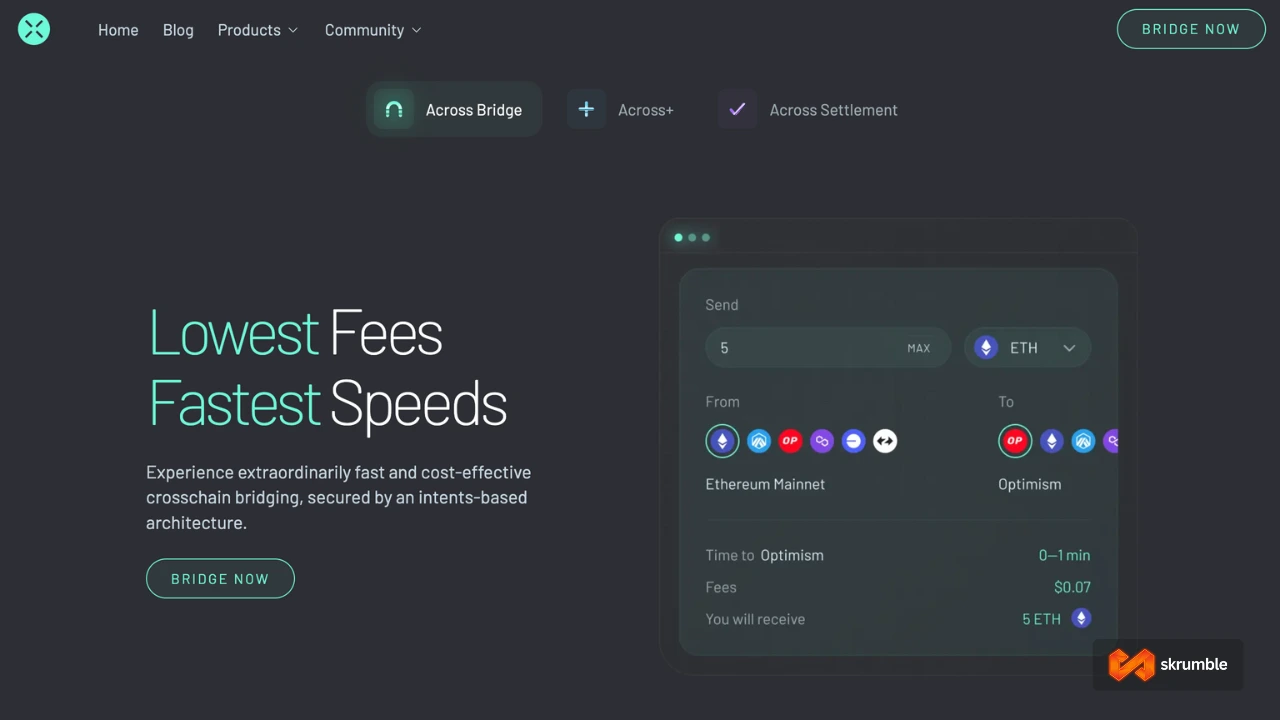
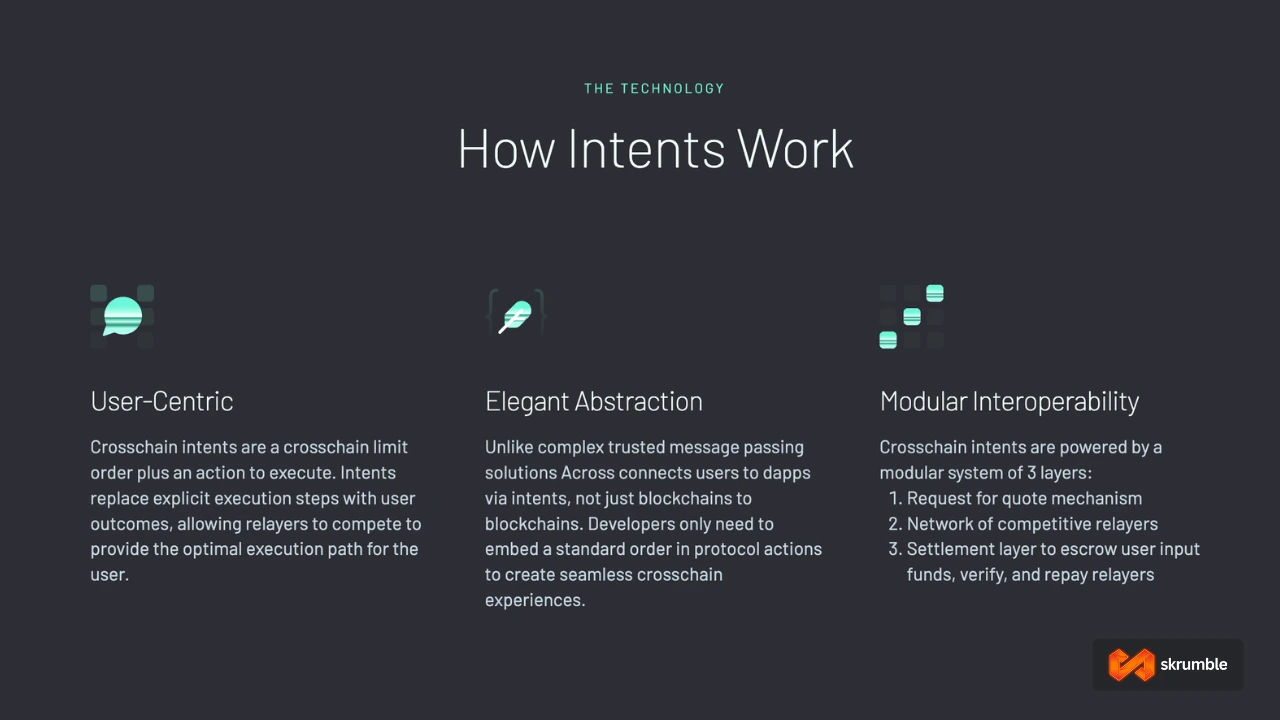
Across Protocol is an intent-based bridge. You deposit into a SpokePool on the origin chain, a relayer fills your transfer on the destination chain with its own capital, and Across repays the relayer later through its HubPool on Ethereum. Unlike complex trusted message passing solutions, Across connects users to dApps via intents, not just blockchains to blockchains.
V4 Architecture and the V5 Gateway
Across V4, launched on 2 July 2025, introduced a universal architecture powered by intents and zero-knowledge proofs (a Succinct SP1Helios light client of Ethereum). Across says this lets it add new chains in hours instead of weeks. On 17 August 2026 a V5 Gateway contract followed, for solver-executed paths that users sign (L2BEAT).
The protocol operates through a three-layer system:
- Intent Layer: Users specify desired outcomes rather than execution paths
- Relayer Network: Decentralized relayers compete to fulfill user intents quickly
- Settlement Layer: Zero-knowledge proofs verify intent settlement across chains securely and universally
Security Through UMA's Optimistic Oracle
Across Protocol is secured by UMA's optimistic oracle, which verifies transfers optimistically, allowing for quick processing while maintaining security. The system requires just one honest actor to dispute fraudulent transactions, making it highly secure while maintaining speed.
Reality Check: While Across excels in speed and efficiency, the June 2025 governance controversy over token allocation raised questions about DAO oversight. In April 2026 ACX holders voted to convert the token into equity of a company, AcrossCo (see the ACX section below).
Unique Features
ERC-7683 Standard Innovation
Across Protocol introduced ERC-7683, a new token standard designed specifically to fill cross-network intent and prevent relayer fragmentation. This standard, developed with Uniswap, creates universal compatibility for cross-chain intents.
Uniswap Integration
The protocol powers Uniswap's in-app bridging for both its web app and wallet, enabling transfers across nine chains. This integration demonstrates Across's enterprise-level reliability.
ACX Rewards System
The protocol has run a dual rewards approach paid in ACX. Because holders voted in April 2026 to convert ACX into AcrossCo equity or sell it back for USDC, check that these programs are still running before you count on them:
Referral Program
Users earn ACX tokens by referring others, with tiered rewards based on volume and referral count. The program operates through custom referral links that benefit both referrer and referee.
Reward Locking
This advanced version of traditional liquidity mining discourages farm-and-dump activities and rewards committed contributors. The longer liquidity providers leave rewards unclaimed, the faster they earn additional rewards.
Supported Networks and Assets
Networks
Across routes transfers on 20+ chains, including Ethereum, Arbitrum, Base, Optimism, BNB Smart Chain and Tron. Its homepage lists 28, but Mode, Lens, Lisk and Zora had no working route when we checked the Across API in October 2026. For the complete list of supported networks, visit the official Across documentation. Major supported networks include:
- Ethereum Mainnet
- Arbitrum One
- Base
- Optimism
- Polygon
- zkSync
- Linea
- Unichain
- HyperEVM
- BNB Smart Chain
- Avalanche
- Tron
- Solana (through Circle's CCTP only)
Supported Assets
Check the token list in the Across app for your route. Key assets include:
- Major Stablecoins: USDC, USDT, DAI
- Native Assets: ETH, WETH
- DeFi Tokens: BAL, UMA
- Protocol Tokens: ACX
- Bitcoin: WBTC
Fees Structure
Across's total fee has up to three parts, according to its docs:
Liquidity Provider Fees
The LP fee follows a utilization-based curve and is zero when the relayer is repaid on the origin chain.
Relayer Fees
The relayer fee covers the relayer's gas on the destination chain and the cost of the capital it fronts until Across repays it. Apps that integrate Across can add their own app fee on top.
Example Quote
A quote on 9 October 2026 (22:02 UTC) to move 1,000 USDC from Ethereum to Arbitrum showed a relay fee of 0.107101 USDC (0.100000 for capital plus 0.007101 for gas) and no LP fee, so you would receive 999.892899 USDC, about 0.011% less. Ethereum gas for the deposit is extra and came to cents at that day's gas prices.
Security and Audits
The audit page in Across's docs lists eight OpenZeppelin reports (none dated): Across V2, V3, a V3 incremental review and the ACX token and distributor, plus four audits of UMA contracts, including its Optimistic Oracle. No other auditor is listed. The protocol's security model includes:
- UMA's Optimistic Oracle verification
- Intent-based relayers providing economic security
- Zero-knowledge proofs in V4 architecture
- Decentralized dispute resolution
- Upgrade keys: according to L2BEAT, a 3-of-5 multisig can upgrade the Ethereum and OP SpokePools with no delay, and a separate 3-of-5 multisig can do the same for the V5 Gateway; the OptimisticGovernor path has a 2-day delay
July 2026 Solana Incident
On 17 July 2026 a flaw in Risk Labs' off-chain Solana event reader let an attacker fabricate 1,627 fake deposits with a face value of about $41.7 million. Risk Labs' own relayer filled 581 of them and lost about $4.5 million of its capital, under $4 million net once about $500,000 of the attacker's funds were trapped. User funds were not affected and the smart contracts were not compromised. Solana transfers were paused and came back about 12 hours later through Circle's CCTP, which is still the only Solana route as of October 2026. DefiLlama's hacks database lists no other Across incident.
Reality Check: The listed audits come from a single firm, and the protocol's reliance on relayers means users depend on third-party capital availability during high-demand periods.
Performance Metrics
Volume Statistics
- Total processed volume: over $40 billion and 5 million users (Across's own figures)
- Average fill time: 1.2 seconds (Across's own figure); our 1,000 USDC quote from Ethereum to Arbitrum estimated 2 seconds
- L2BEAT 24 h snapshot: $32.51 million across about 28,000 transfers, with Arbitrum and Ethereum the busiest path
- Value locked: $18.85 million in the HubPool on 9 October 2026, down from $86.6 million a year earlier (DefiLlama). In the intent model this is not a cap on how much you can bridge
Market Position
Across performs strongly among cross-chain bridges with a 4.5/5.0 overall score based on security, speed, fees, chain coverage and reliability, competing effectively with established players like Stargate Finance and Portal Bridge.
Setting the Record Straight
Our research uncovered several persistent misconceptions about Across Protocol that deserve clarification:
Myth:
Across Protocol is just another generic bridge
Reality:
Across uses an intent-based architecture where users specify outcomes rather than execution paths, fundamentally different from traditional bridging mechanisms that require complex multi-step processes.
Myth:
Fast bridges sacrifice security for speed
Reality:
Across gets its speed from relayers fronting their own capital, with UMA's optimistic oracle settling disputes afterwards. In the July 2026 Solana incident, Risk Labs' own relayer took the loss and user funds were not affected. Across still has security trade-offs, such as the no-delay upgrade keys described in the security section above.
Myth:
Cross-chain bridges are too complex for average users
Reality:
Across abstracts complexity through intent-based design, allowing users to simply specify desired outcomes while the protocol handles execution automatically.
ACX Token and Governance
The Bridge Across Vote
In a Snapshot vote that closed on 7 April 2026, ACX holders approved "The Bridge Across" with about 91.5% of the votes cast (44.69 million ACX For, 4.14 million Against). Under the proposal, each ACX converts 1:1 into equity of AcrossCo, a US company, or is bought back for USDC at $0.04375. We have not verified whether the conversion has been carried out yet.
Important Note: The June 2025 controversy involved allegations that team members used governance proposals to transfer approximately $23 million worth of ACX tokens to their private company, raising questions about governance transparency. Founder Hart Lambur called the claims "categorically untrue".
Recent Developments and Future Outlook
Major Partnerships
- MetaMask Integration: Trusted bridge provider
- Uniswap Partnership: Powers cross-chain functionality
- Unichain Launch: Recently integrated with Unichain's public mainnet as a cross-chain transfer tool
Technology Roadmap
The future points toward complete bridge abstraction where users shouldn't need to understand complex mechanics, similar to how we don't think about TCP/IP protocols when browsing the internet.
Things to Consider
Limitations
- Solana via CCTP Only: since the July 2026 incident, Solana transfers run only through Circle's CCTP, which was quoted at about 20 seconds in October 2026
- Instant Upgrades: two 3-of-5 multisigs can upgrade the Ethereum and OP SpokePools and the V5 Gateway with no delay
- Relayer Dependency: Transaction speed depends on relayer availability
- Governance Changes: after the June 2025 controversy, ACX holders voted in April 2026 to convert the token into AcrossCo equity
Competition
Across competes in a crowded bridge market against established players like Stargate Finance, Portal Bridge, and others, each offering different strengths for non-EVM chain support and alternative bridging approaches.
Skrumble Community Ratings
We're building our Across Protocol review section! Share your experience to help others, particularly regarding:
- Cross-chain transfer speeds and reliability in different network conditions
- Fee comparisons with other bridges you've used for similar routes
- Asset availability and which tokens you successfully bridged
- Customer support quality and response times for any issues
- Integration experiences if you're a developer using Across in dApps
- Governance participation and your thoughts on recent DAO decisions
Your insights help fellow crypto users make informed bridging decisions. Submit your review to contribute to our community knowledge base.
Conclusion
Across Protocol has established itself as a highly competitive cross-chain bridge through innovative intent-based architecture and universal scalability. The V4 upgrade represents a fundamental shift in how bridges operate, enabling rapid network expansion.
Bottom Line
For transfers between Ethereum and its layer 2s, Across offers some of the fastest, cheapest bridging we found. However, potential users should weigh its no-delay upgrade keys, the July 2026 Solana relayer incident and the CCTP-only Solana route.
Across says it has moved over $40 billion, and its major partnerships with MetaMask and Uniswap demonstrate real-world adoption and enterprise trust, making it a compelling solution for cross-chain interoperability. For comparison with other leading bridges, see our Stargate Finance review and cross-chain bridge comparison hub.
FAQs
What Makes Across Protocol Different from Other Bridges?
+Unlike complex trusted message passing solutions, Across connects users to dApps via intents, not just blockchains to blockchains. This intent-based approach gave an estimated 2-second fill in our October 2026 quote for 1,000 USDC from Ethereum to Arbitrum; Solana transfers via CCTP were quoted at about 20 seconds.
Is Across Protocol Safe in 2026?
+Across has a solid record, with caveats. Its docs list OpenZeppelin audits, and disputes are settled through UMA's optimistic oracle. In July 2026 a flaw in Risk Labs' off-chain Solana event reader cost Risk Labs' own relayer under $4 million net; user funds were not affected and the contracts were not compromised. Two 3-of-5 multisigs can also upgrade the Ethereum and OP SpokePools and the V5 Gateway with no delay.
What's the Best Alternative to Traditional ETH Bridges?
+For Layer 2 transfers, Across Protocol excels with 2-second fills and a 0.107 USDC fee on 1,000 USDC from Ethereum to Arbitrum (October 2026 quote). For non-EVM chains such as Sui, Algorand or Near, consider Portal Bridge; for native USDC, USDT and ETH from pools on major EVM chains, consider Stargate Finance.
How Does Across V4 Improve on Previous Versions?
+V4 introduced a universal architecture that uses zero-knowledge proofs in settlement. Across says this lets it add new chains in hours instead of weeks.
Risk Warning:
Trading Forex, CFDs, and cryptocurrencies carries a high level of risk and may not be suitable for all investors. These markets are volatile and can result in the loss of your invested capital. Make sure you fully understand the risks before trading.
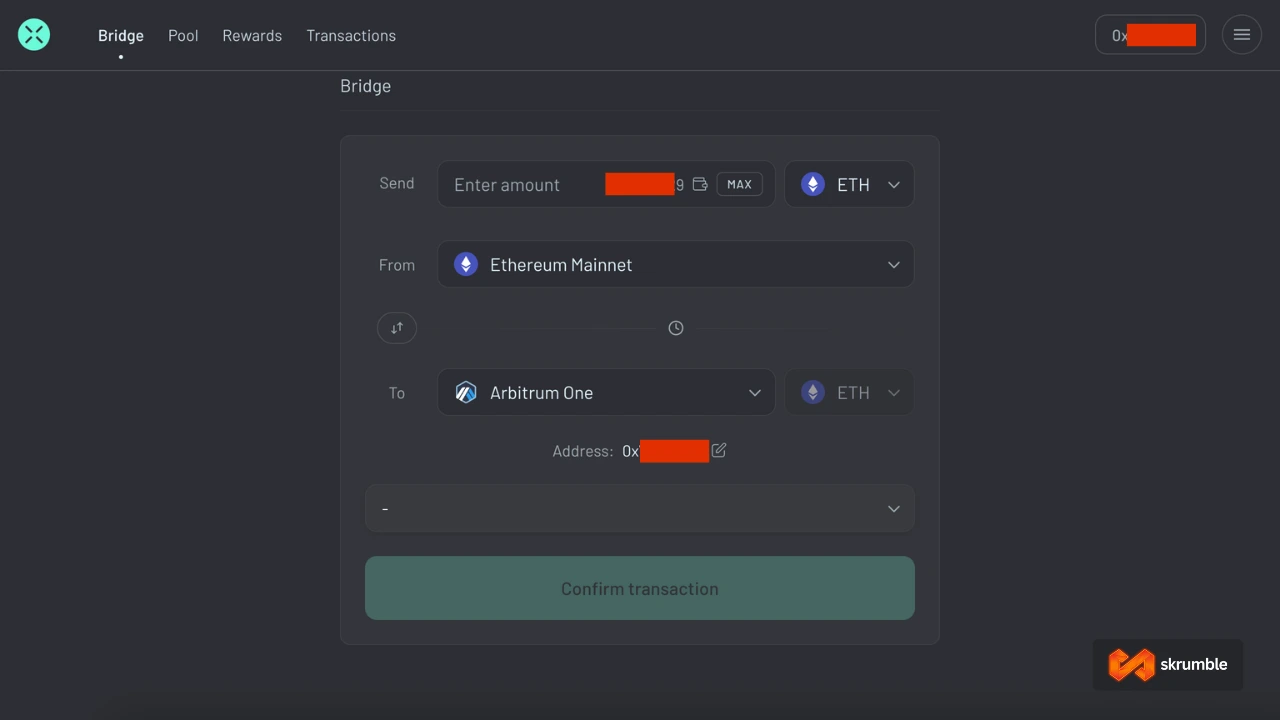
Screenshots captured during testing