

Orbit Bridge Reseña
Lock-and-mint bridge hacked in 2024, no longer recommended
Status, checked 10 October 2026: Not recommended. Orbit Bridge lost about $81.5 million on 1 January 2024 (Korean time) when an attacker obtained enough signatures to meet its Ethereum vault's 7-of-10 multisig threshold, and the funds were never recovered. Silicon, the layer 2 network that holds Orbit's migrated Ethereum assets, stopped new deposits on 2 September 2026 and shuts down on 31 December 2026 at 12:00 KST, so withdraw any assets there before then. See the crypto bridges we still recommend.
De un vistazo
Orbit Bridge is a lock-and-mint bridge run by Ozys. Its Ethereum vault was secured by a 7-of-10 multisig, and in January 2024 an attacker obtained enough signatures to meet that threshold and drained about $81.5 million, which was never recovered. DefiLlama shows $17.26 million still locked on 8 chains (9 October 2026), down from a $313 million peak in August 2022.
Existing users withdrawing assets, especially from Silicon before it shuts down on 31 December 2026 at 12:00 KST. We do not recommend Orbit Bridge for new transfers.
You need a bridge for new transfers. Orbit's 2024 loss was never repaid and its Ethereum-side infrastructure is closing, so pick a bridge from our current ranking instead.
At A Glance
Who Is Orbit Bridge Best For?
Best for: Only existing users who need to move assets out, especially from Silicon, the layer 2 that holds Orbit's migrated Ethereum assets and shuts down on 31 December 2026 at 12:00 KST Skip if: You want a bridge for new transfers. Orbit's 2024 hack losses were never repaid, so pick a bridge from our current ranking insteadOur Take
Orbit Bridge is a lock-and-mint bridge run by Ozys, the company behind Orbit Chain. On 1 January 2024 (Korean time) an attacker obtained enough signatures to meet the 7-of-10 multisig threshold protecting its Ethereum vault smart contract and drained about $81.5 million. The funds were never recovered, Orbit did not repay users, and Silicon, the layer 2 that now holds Orbit's migrated Ethereum assets, is shutting down at the end of 2026. We no longer recommend Orbit Bridge; this review stays online as a record and a withdrawal warning.Why Orbit Bridge Has No Score
We no longer score Orbit Bridge. Our ranking only includes bridges with no unrecovered loss of user funds, and the money taken from Orbit in 2024 was never recovered. See our full crypto bridge scoring methodology here.What is Orbit Bridge and How Does it Work?
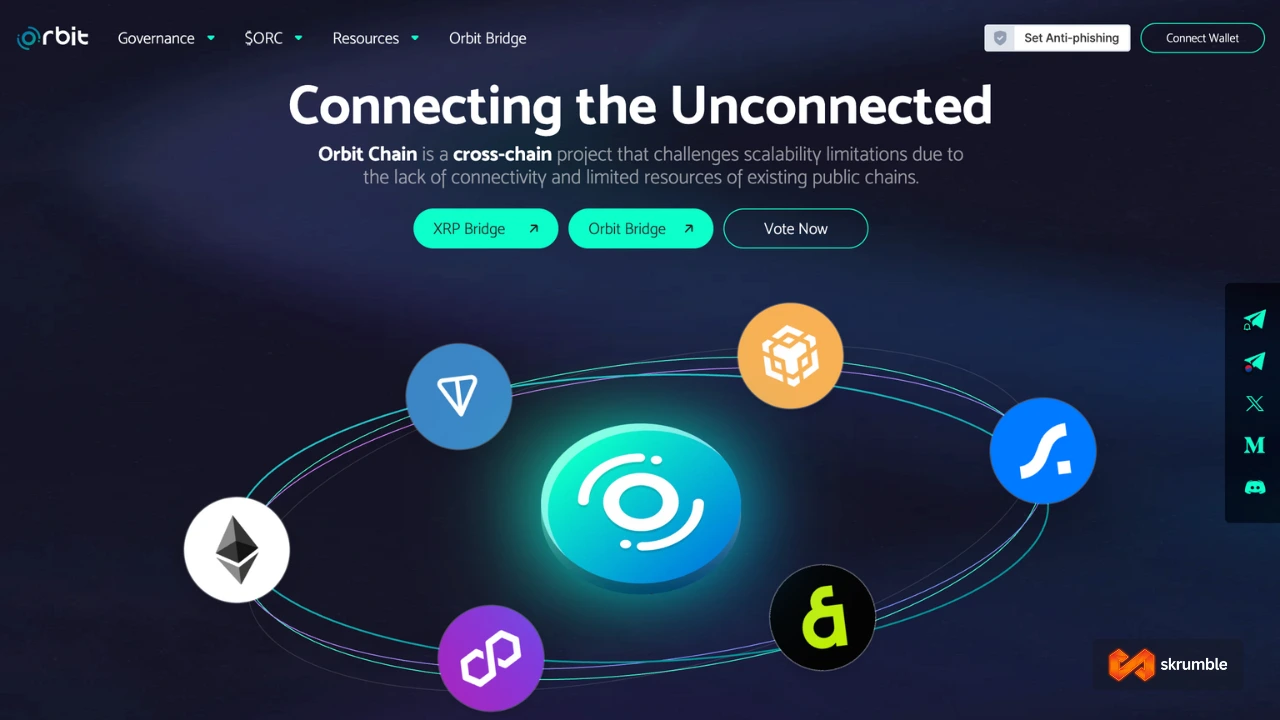 Orbit Bridge is a cross-chain bridge service that facilitates token transfers between different blockchain networks. Its value locked was $17.26 million on 9 October 2026 (DefiLlama), down from $30.8 million a year earlier and a peak of $313 million in August 2022.
The bridge operates using a lock-and-mint mechanism where assets are deposited on the source chain and representative tokens are minted on the destination chain. This process enables users to move their cryptocurrency holdings between previously incompatible blockchain networks.
Orbit Bridge utilizes a Multi-signature-based transaction consensus system. The protocol's governance structure includes Operator and Validator roles working together to process cross-chain transactions. Operators send transaction data while Validators verify and process the transactions through the Orbit Chain network.
The consensus and validation processes occur via transactions on the Orbit Chain, which the platform claims provides transparency and trustless operation. In practice the multisig was the weak point. The Ethereum vault needed 7 of its 10 signers to approve a transaction, and in January 2024 an attacker obtained enough signatures to meet that threshold.
Orbit Bridge is a cross-chain bridge service that facilitates token transfers between different blockchain networks. Its value locked was $17.26 million on 9 October 2026 (DefiLlama), down from $30.8 million a year earlier and a peak of $313 million in August 2022.
The bridge operates using a lock-and-mint mechanism where assets are deposited on the source chain and representative tokens are minted on the destination chain. This process enables users to move their cryptocurrency holdings between previously incompatible blockchain networks.
Orbit Bridge utilizes a Multi-signature-based transaction consensus system. The protocol's governance structure includes Operator and Validator roles working together to process cross-chain transactions. Operators send transaction data while Validators verify and process the transactions through the Orbit Chain network.
The consensus and validation processes occur via transactions on the Orbit Chain, which the platform claims provides transparency and trustless operation. In practice the multisig was the weak point. The Ethereum vault needed 7 of its 10 signers to approve a transaction, and in January 2024 an attacker obtained enough signatures to meet that threshold.
Unique Features
Orbit Bridge Explorer
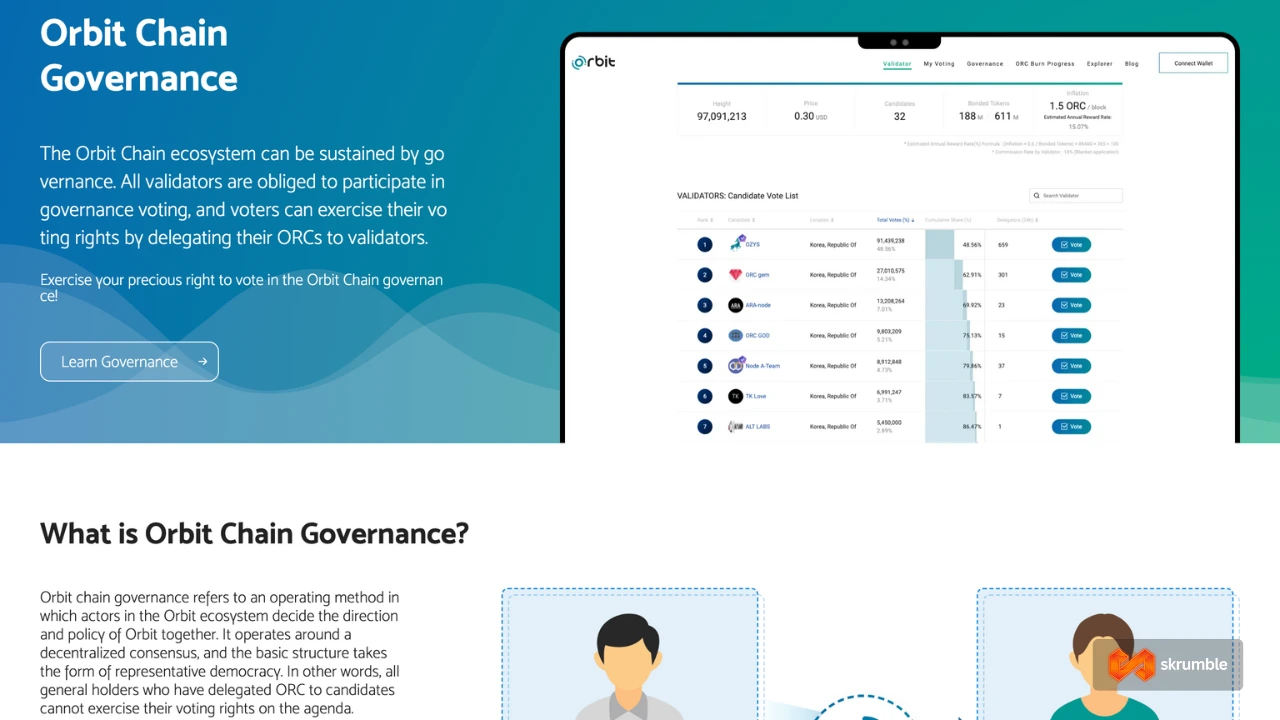
The Orbit Bridge Explorer provides users with comprehensive transaction tracking capabilities. This blockchain explorer allows users to monitor cross-chain transfers in real-time and search for transactions, addresses, and blocks across the supported networks. Key features of the explorer include:- Transaction filtering by block height, address, and transaction hash
- Real-time data access for monitoring transfer status
- Pegged volume tracking showing assets locked in the bridge
- Integrated wallet creation for accessing Orbit Chain services
Cryptocurrencies Available on Orbit Bridge
Orbit Bridge has carried major assets like ETH, USDT, USDC, DAI and WBTC, plus Orbit Chain's native ORC token. Tokens bridged this way arrive on the destination chain as Orbit's wrapped versions, called oAssets (oUSDT, for example). Assets it has carried include:- Major cryptocurrencies: ETH, USDT, USDC, DAI, WBTC
- Native token: ORC
- DeFi tokens: Various protocol tokens across supported networks
Networks Available on Orbit Bridge
According to DefiLlama, Orbit Bridge funds still sit on 8 networks. The largest balances on 9 October 2026:- Silicon: $8.7 million. This zk layer 2 on Polygon's Agglayer holds the assets migrated from Orbit's Ethereum vault after the hack
- Ripple (XRP Ledger): $7.5 million
- BNB Chain: $0.9 million on Binance's blockchain
- Other networks: five more chains hold small balances. HECO and Celo, listed in earlier versions of this review, now hold nothing
Orbit Bridge Fees
We did not verify Orbit Bridge's current fees for this update, so we no longer publish fee figures or fee examples for it. Earlier versions of this review described a 0.1% layer fee that funded ORC buybacks. We could not confirm that fee, and the buyback is out of date, so both have been removed. If you still need to move assets out of Orbit Bridge:- Mind the Silicon deadline: Silicon stopped new deposits on 2 September 2026 and supports withdrawals only until 31 December 2026 at 12:00 KST
- Check the full cost before you confirm a transfer, since we no longer track Orbit's fees
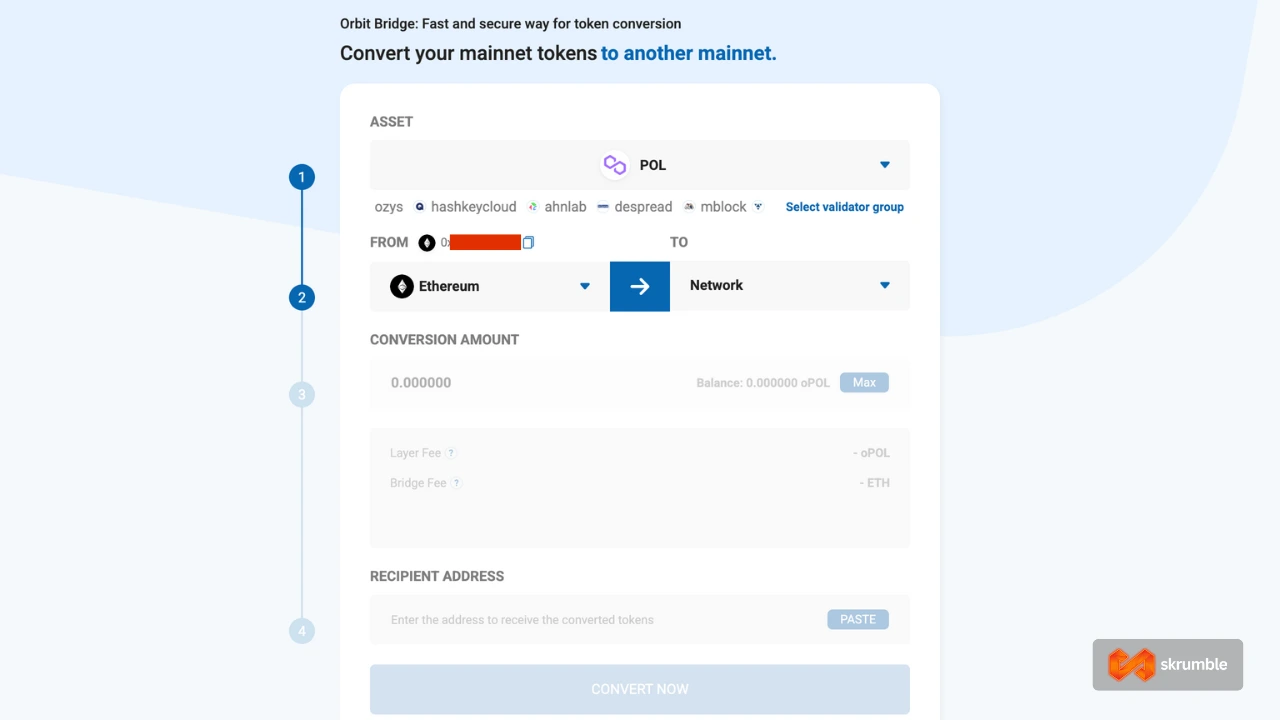
- Use only the official app at bridge.orbitchain.io, and send a small test amount first
What Still Works
When we checked on 9 October 2026:- The Orbit Bridge app at bridge.orbitchain.io still loaded
- The XRP Ledger vault, holding $7.5 million, was still online
- Silicon was withdrawal-only: new deposits have been disabled since 2 September 2026
Is Orbit Bridge Safe?
 No, not for new transfers. On 1 January 2024 (Korean time; 31 December 2023 UTC), an attacker drained about $81.5 million in ETH, WBTC, USDT, USDC and DAI from Orbit Bridge's Ethereum vault. The vault was a 7-of-10 multisig, and the attacker obtained enough signatures to meet that threshold. Orbit has not published a final post-mortem, so how the attacker got those signatures has not been disclosed.
What happened after the hack:
No, not for new transfers. On 1 January 2024 (Korean time; 31 December 2023 UTC), an attacker drained about $81.5 million in ETH, WBTC, USDT, USDC and DAI from Orbit Bridge's Ethereum vault. The vault was a 7-of-10 multisig, and the attacker obtained enough signatures to meet that threshold. Orbit has not published a final post-mortem, so how the attacker got those signatures has not been disclosed.
What happened after the hack:
- Insider allegation: Ozys accused its former chief information security officer, who left the company on 6 December 2023, of weakening the firewall settings before departing
- No attribution: rekt.news raised the Lazarus Group as a possibility, but the attack has not been attributed
- Laundering: about $48 million moved through Tornado Cash in June 2024, according to The Block; other tallies give different amounts
- No repayment: the funds were never recovered. Ozys bought some oAssets back at a discount and in October 2024 started a lock-up incentive for the oAssets tied to the stolen funds
- Infrastructure closing: Silicon, the layer 2 that holds Orbit's migrated Ethereum assets, stopped new deposits on 2 September 2026 and shuts down on 31 December 2026 at 12:00 KST
- Multisig vault: the original Ethereum vault contract now requires 6 of 9 signers, down from 7 of 10 at the time of the hack
- Smaller community means less independent security review
- Old audit: the only audit in Orbit's bridge-contract GitHub repository is a Theori review from the first quarter of 2022
Orbit Native Token ORC
The Orbit Chain Token (ORC) is the native token of the Orbit ecosystem. The staking rewards and buyback and burn described in earlier versions of this review are out of date. ORC today:- Price: about $0.00063 on 9 October 2026 (DefiLlama)
- Staking: ORC staking on Silicon was suspended in September 2026
- Voting Rights: Token holders participate in protocol governance
Things We Do Not Like about Orbit Bridge
Our analysis identified several areas where Orbit Bridge falls short of user expectations and industry standards: Unrecovered Hack: The January 2024 losses were never repaid, and Orbit has not published a final post-mortem explaining how the attacker met the 7-of-10 signature threshold. Limited Smart Contract Audits: The only audit in Orbit's bridge-contract repository is a Theori review from the first quarter of 2022, so it has fewer publicly available smart contract audits than leading bridge protocols like Stargate Finance or Portal Bridge. Community and Adoption: The platform has a smaller community compared to established bridges like Stargate Finance or Portal Bridge. This limits peer support, community-driven security reviews, and overall ecosystem development. Shrinking Infrastructure: Silicon, which holds Orbit's migrated Ethereum assets, shuts down at the end of 2026, and the bridge's value locked has fallen from a $313 million peak in August 2022 to $17.26 million on 9 October 2026.Conclusion
We no longer recommend Orbit Bridge. In January 2024 an attacker obtained enough signatures to meet the 7-of-10 threshold of its Ethereum vault multisig and drained about $81.5 million, and the funds were never recovered. Silicon, the layer 2 that now holds Orbit's migrated Ethereum assets, stopped new deposits on 2 September 2026 and shuts down on 31 December 2026 at 12:00 KST. If you still hold assets on Silicon, withdraw them before that deadline. For new transfers, choose one of the best crypto bridges we still recommend.Bottom Line
Orbit Bridge was hacked in 2024, never repaid the losses, and its Ethereum-side infrastructure is closing. Use it only to withdraw what you still hold.Skrumble Community Ratings
We're building our Orbit Bridge review section! Share your experience to help others, particularly regarding:- Your experience with different blockchain networks
- How fees compare to other cross-chain bridges
- Transaction times and any issues encountered
- Support quality and documentation clarity
FAQs
What is Orbit Bridge?
+ Orbit Bridge is a cross-chain bridge protocol run by Ozys that lets users transfer cryptocurrency assets between different blockchain networks with a lock-and-mint design. It lost about $81.5 million in a January 2024 hack that was never repaid, and we no longer recommend it.How does Orbit Bridge work?
+ Orbit Bridge uses a lock-and-mint mechanism where assets are locked on the source blockchain and equivalent tokens are minted on the destination chain. The process is validated through a multi-signature consensus system, and on Ethereum that multisig (7 of 10 signers at the time) was the point of failure in the January 2024 hack.What is the ORC token used for?
+ ORC is the native token of the Orbit ecosystem. It traded at about $0.00063 on 9 October 2026, ORC staking on Silicon was suspended in September 2026, and the buyback and burn described in earlier versions of this review is out of date.How long do Orbit Bridge transfers take?
+ We have not measured Orbit Bridge transfer times for this update. Because we no longer recommend the bridge, we do not publish a speed estimate for it.What wallets does Orbit Bridge support?
+ Orbit Bridge supports popular wallets including MetaMask, Kaikas, Klip, and D'CENT. These wallets provide access to the platform's cross-chain transfer functionality across supported networks.Is Orbit Bridge safe to use?
+ No, not for new transfers. In January 2024 an attacker obtained enough signatures to meet the 7-of-10 threshold of the Ethereum vault multisig and drained about $81.5 million, which was never recovered. If you still hold assets on Silicon, withdraw them before 31 December 2026 at 12:00 KST.What are Orbit Bridge's fees?
+ We did not verify Orbit Bridge's current fees for this update, so we do not publish fee figures. Check the full cost before you confirm a withdrawal.Risk Warning:
Trading Forex, CFDs, and cryptocurrencies carries a high level of risk and may not be suitable for all investors. These markets are volatile and can result in the loss of your invested capital. Make sure you fully understand the risks before trading.Screenshots