What is a DAO? 2026 Decentralized Autonomous Org Guide
What is a DAO in 2026: $26B+ on-chain treasuries, Uniswap + Sky + Optimism + Arbitrum + Lido top 5, governance lifecycle, legal frameworks, and risks.
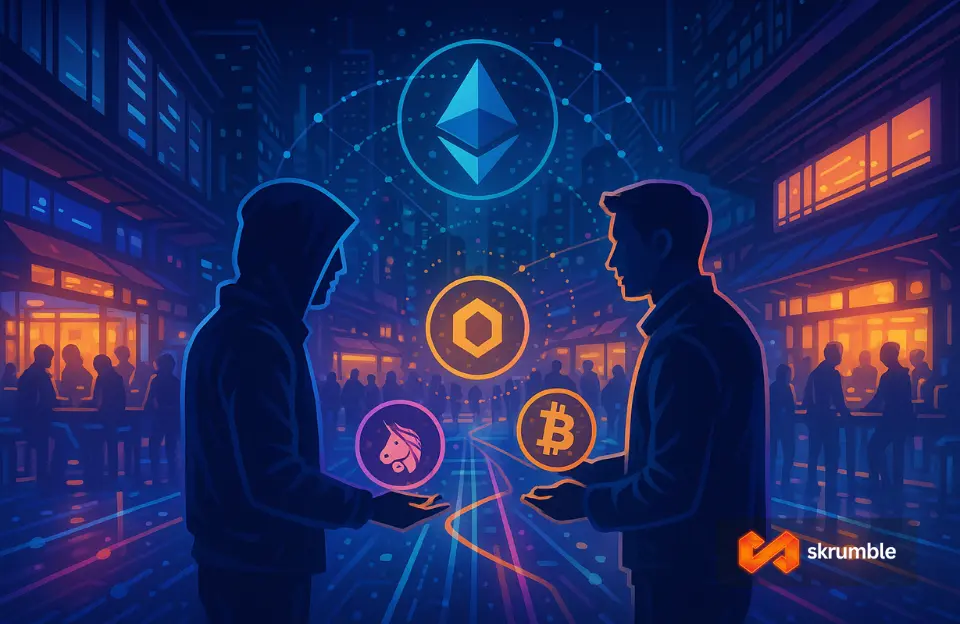
What is a DAO? A DAO (Decentralized Autonomous Organization) is an internet-native organization whose membership, decision-making, and treasury operations live on a public blockchain via smart contracts rather than inside a traditional corporate structure. Token holders propose changes; on-chain voting decides outcomes; smart contracts execute approved proposals automatically. The 2026 reality: DAOs collectively hold approximately $26 billion in on-chain treasury assets across the active set. The five largest treasuries per DeepDAO are Uniswap ($4.8 billion, nearly all in UNI tokens), Sky/MakerDAO ($3.9 billion across diversified assets and DAI/USDS reserves), Optimism Collective ($2.1 billion mostly in OP), Arbitrum DAO ($1.7 billion with approximately 90% in ARB), and Lido ($1.4 billion). The honest 2026 framing: most major DAOs have evolved from the original "fully on-chain governance" ideal into hybrid structures combining multisig executive teams with on-chain voting on major decisions. The Wyoming DAO LLC law (2018) and Marshall Islands DAO Act (2024) gave some entities formal legal status; most DAOs operate without legal personality and accept the corresponding regulatory ambiguity.
This guide on what is a DAO walks the mechanics (governance tokens, proposals, voting, execution), the leading 2026 DAO examples, the structural failure modes (low voter turnout, whale domination, governance attacks), the legal status across jurisdictions, the treasury-management realities, and the user-side participation guide. For broader blockchain context, see our blockchain pillar guide; for the smart-contract substrate, see what is a smart contract.
What is a DAO in 2026?
A DAO is a coordination mechanism where rules are encoded in smart contracts and decisions are made by token-weighted voting from members. The defining properties: membership is open (typically by holding the DAO's governance token), proposals are public on-chain artifacts, voting is recorded immutably on the blockchain, and the treasury is held in smart contracts that execute proposals when they pass. The result is an organization that can operate across jurisdictions without a single incorporating country, persist across personnel changes, and resist arbitrary shutdown by any single party including its founders.
The 2026 production landscape is materially different from the 2020-2022 narrative. Most DAOs that survived past the initial token launch operate as hybrid entities: an executive team or core contributor group does day-to-day operations under multisig control; on-chain governance approves major decisions (treasury spend over a threshold, protocol upgrades, parameter changes). Pure "fully on-chain" governance proved operationally unworkable at scale because real organizations need fast decisions, off-chain coordination, and the ability to negotiate with counterparties. Live data on DAO treasuries and governance activity is published at DeepDAO and Tally.xyz.
How does DAO governance work?
Token-based governance is the dominant model in 2026. The DAO mints a governance token (UNI for Uniswap, MKR for Maker, AAVE for Aave, OP for Optimism, ARB for Arbitrum). Token holders can vote on proposals weighted by their token holdings. A typical proposal lifecycle has five stages. First, an idea is discussed off-chain on the DAO's forum (Discord, Discourse) for days to weeks. Second, a formal Temperature Check vote on Snapshot (off-chain signaling) gauges support before incurring on-chain costs. Third, a Consensus Check refines the proposal based on feedback. Fourth, a formal on-chain Governance Vote (with gas costs) decides the final outcome over a defined window (typically 3-7 days). Fifth, if the vote passes and meets quorum, the proposal queues into a timelock contract (usually 1-7 days) before automatic execution.
The timelock between vote-passing and execution is a defense against governance attacks. If a malicious proposal passes (via a flash-loan-funded vote or sleeper attack), the timelock gives the community time to detect, exit, or coordinate a defensive response. Major DAOs (Compound, Uniswap, Aave) all use timelocks of varying duration. Some DAOs add additional safeguards: a "security council" with veto power on emergency-flagged proposals, multi-sig confirmation of executed actions, and gradual rollout of major changes.
What are the largest DAOs in 2026?
The top five by treasury size per DeepDAO Q1 2026 data:
- Uniswap DAO: approximately $4.8 billion treasury, nearly all denominated in UNI tokens. Controls the Uniswap protocol's fee distribution, governance over V4 hooks ecosystem, and Uniswap Foundation grant funding.
- Sky (formerly MakerDAO): approximately $3.9 billion treasury diversified across DAI/USDS reserves, tokenized RWA holdings (BlackRock BUIDL, Monetalis-managed treasury), and SKY governance token. The most operationally mature DAO with deep on-chain monetary-policy capabilities.
- Optimism Collective: approximately $2.1 billion treasury, mostly in OP tokens. Operates a unique two-house governance structure (Token House for protocol decisions; Citizens' House for retroactive public-goods funding).
- Arbitrum DAO: approximately $1.7 billion treasury, approximately 90% in ARB tokens. Controls the Arbitrum protocol's sequencer revenue, ecosystem grants, and protocol upgrades.
- Lido DAO: approximately $1.4 billion treasury, controls the Lido staking protocol (the dominant Ethereum liquid-staking provider). Treasury split between LDO governance tokens and stETH/ETH operating reserves.
An important caveat tracked by DeepDAO and others: treasuries denominated in the DAO's own native token are illiquid in practice. Uniswap's $4.8 billion treasury cannot be sold for $4.8 billion in stablecoin without crashing the UNI market; Arbitrum's 90%-ARB treasury has the same dynamic. Sky/MakerDAO's diversification across RWAs, stablecoin reserves, and SKY tokens makes it the most operationally resilient treasury in the top tier.
What is a governance token?
A DAO token (governance token) represents voting power in the organization. The token holder can propose actions, vote on proposals, and (in some DAOs) earn a share of protocol fee revenue. Unlike equity in a traditional company, governance tokens typically do not represent ownership of cash flows or assets directly; the value comes from influence over protocol parameters and the potential for fee-switching (the DAO voting to direct protocol revenue to token holders).
The 2026 governance-token landscape splits between active-economic tokens (where the DAO has voted to enable revenue distribution, like AAVE post-2025 fee switch) and pure-governance tokens (where revenue distribution is theoretically possible via a future vote but not currently active, like UNI through 2026 despite multiple fee-switch proposals). The market typically prices in some probability-weighted estimate of future fee distribution. Governance tokens trade on major exchanges as independent cryptocurrencies. Most token distributions follow a pattern: airdrop to early users (Uniswap UNI September 2020 set the template), team and investor allocations with multi-year vesting, ongoing community grants, and a small float at launch growing over time.
What are the risks of DAO governance?
Five risk classes shape DAO outcomes. Low voter turnout: typical participation rates on major DAOs are 5-15% of circulating tokens, meaning a small motivated cohort can decide outcomes. Whale domination: token-weighted voting gives large holders proportional influence; a single whale with 10% of circulating supply has 10x the voting power of 100 retail holders combined. Vote-buying markets: services like Hidden Hand and Votium let large holders compensate smaller holders for delegating votes, creating quasi-corporate dynamics inside ostensibly decentralized organizations.
Governance attacks: the 2022 Beanstalk Farms exploit (approximately $182 million) used a flash loan to acquire enough governance tokens to pass a malicious proposal in a single transaction. Modern DAOs defend with timelocks, quorum requirements, and token-staking-required-to-vote mechanisms. Smart-contract upgrade risk: if a malicious or buggy proposal passes and executes, the consequences can be irreversible; the Curve voting-power exploit attempts (multiple incidents 2023-2024) illustrated the pattern. For broader smart-contract risk context, see our what is a smart contract guide.
Are DAOs legally recognized?
Mixed and jurisdiction-dependent. The 2018 Wyoming DAO LLC law was the first US framework, giving a DAO formal legal personhood as a limited-liability company with smart-contract-defined membership rules. The 2024 Marshall Islands DAO Act extended this with a fuller framework, with reduced documentation requirements. The 2025 Tennessee Decentralized Autonomous Organization Act added a third state-level US framework. As of 2026, dozens of major DAOs have registered Wyoming or Marshall Islands LLCs to provide a legal-personhood wrapper around the on-chain governance.
Most DAOs that have not adopted a legal wrapper operate in regulatory ambiguity. The SEC has taken enforcement action against some DAO-issued tokens (treating them as unregistered securities) but has not yet ruled definitively on the legal nature of DAO membership itself. The CFTC enforcement against Ooki DAO in 2022 established that DAOs can be served legal process via on-chain messages, creating procedural precedent without resolving the substantive questions. Members of unwrapped DAOs may have individual liability exposure for DAO actions in some jurisdictions; the legal wrapper substantially reduces this risk.
How do I participate in a DAO?
The user-side workflow has three layers. First, acquire the DAO's governance token via spot exchange purchase or DEX swap; for token-acquisition workflows see our how to buy Ethereum guide (UNI, MKR, AAVE, OP, ARB are all available on major exchanges). Second, delegate voting power: most DAOs use delegation (you assign your voting power to a delegate who actively follows governance) rather than expecting every holder to vote directly. Tally.xyz aggregates delegate profiles, voting history, and policy positions across major DAOs. Third, vote on proposals: directly via Snapshot (off-chain signaling) or via the DAO's on-chain governance contract for binding votes.
Active participation beyond voting: most DAOs run forums (Discord, Discourse, Commonwealth) where proposals are discussed before formal votes. Many DAOs operate grant programs that pay contributors for specific work (governance research, security audits, ecosystem development). The Optimism Collective's RetroPGF (retroactive public-goods funding) program has distributed over $80 million to ecosystem contributors through five rounds.
What is the difference between a DAO and a corporation?
Five structural differences. Membership: corporations have shareholders; DAOs have token holders. Equity vs governance: corporate equity represents ownership of cash flows; DAO governance tokens represent voting power, with cash-flow rights varying by DAO design. Decision-making: corporations rely on board approval and management discretion; DAOs require on-chain proposal-and-vote cycles. Treasury: corporate treasuries are bank-account-held with traditional custodial controls; DAO treasuries are on-chain smart-contract-held with multi-sig or governance-required spend approval. Legal status: corporations have unambiguous legal personhood; DAOs operate in regulatory gray areas unless they adopt a legal wrapper (Wyoming LLC, Marshall Islands, Tennessee).
The practical implication: DAOs are slower for routine decisions but faster for parameter changes (a fee-switch vote can execute in days; a corporate equivalent might take quarters). DAOs are radically transparent but operationally awkward for confidential matters (negotiating with counterparties, hiring decisions, sensitive partnerships). Hybrid structures (multisig executive team + on-chain governance) have emerged as the practical resolution.
Frequently asked questions
Can I make money from a DAO?
Three paths. Token appreciation: governance tokens can rise in value as the underlying protocol grows. Fee distribution: some DAOs distribute a portion of protocol revenue to token holders (Aave, dYdX, others have active fee distributions; Uniswap has held proposals but not enabled distribution through mid-2026). Active contribution: DAOs pay contributors for governance research, ecosystem development, security audits, and other work through grant programs. The Optimism RetroPGF and Arbitrum grant programs together have distributed hundreds of millions to contributors.
How is a DAO different from a multisig?
A multisig (Safe being the dominant implementation) is a smart wallet controlled by a fixed set of signers requiring some threshold (e.g., 3-of-5) to execute actions. A DAO is a broader organizational structure that may use a multisig for treasury operations but adds open-membership token-based governance for major decisions. Many DAOs use both: open token-based voting for protocol parameters, multisig executive control for fast operational decisions.
Are DAOs taxable?
Yes, in the US framework, though specific treatment depends on the DAO structure and the user's role. Acquiring governance tokens at FMV from an airdrop is ordinary income at receipt. Buying governance tokens with USD is not a taxable event (the tokens get cost basis equal to USD paid). Selling tokens or swapping them realizes capital gains. Receiving protocol fee distributions or grant payments is ordinary income. The Wyoming DAO LLC structure provides clearer entity-level tax treatment; unwrapped DAOs leave members with individual tax responsibility for their share of DAO activity in some interpretations.
What is a DAO proposal?
A formal request for the DAO to take some action (deploy treasury funds, change a protocol parameter, upgrade a smart contract, fund a grant). Proposals typically pass through a discussion phase on the DAO's forum, a Temperature Check on Snapshot, a Consensus Check, and a final on-chain Governance Vote. The exact process varies by DAO; major DAOs publish their governance process documentation on their forums.
Can a DAO be hacked?
Yes, in two main ways. A governance attack uses flash loans or accumulated tokens to pass a malicious proposal that drains treasury funds; the 2022 Beanstalk Farms exploit ($182 million) is the canonical case. A smart-contract vulnerability in the DAO's governance contract or in a treasury-held protocol can be exploited even without a governance vote; the various 2022-2024 oracle-attack incidents drained funds from DAO-controlled lending protocols.
What is a sub-DAO?
A smaller DAO within a larger DAO structure, typically focused on a specific function. Examples: BanklessDAO has multiple sub-DAOs for specific publications and projects; MakerDAO/Sky has SubDAOs (formerly MetaDAOs) for specialized lending and asset-management functions. Sub-DAOs have their own governance tokens and treasuries but operate within the parent DAO's broader strategic framework.
Should I join a DAO?
Depends on goal. For passive investment exposure to a protocol's success, holding the governance token without active participation is sufficient. For active influence over protocol direction, becoming a delegate (or delegating to one whose positions match yours) provides leverage proportional to your token holdings. For contribution income, the grant-program and RetroPGF pathways provide compensation for ecosystem work. The barrier to passive participation is approximately zero; the barrier to active participation is forum engagement and developing a public reputation in the governance ecosystem.
Will DAOs replace traditional corporations?
Unlikely in their current form, more likely as a hybrid pattern. The structural advantages of DAOs (transparency, jurisdictional flexibility, automated execution, programmable membership) suit specific use cases (protocol coordination, public-goods funding, open-source-project governance) better than corporations do. The structural disadvantages (slow decision-making, lack of confidentiality, regulatory ambiguity, voter-apathy dynamics) make DAOs poor fits for many traditional corporate use cases. The 2026 trend is hybrid structures combining DAO-style governance with corporate-style operational control, accepting trade-offs on both sides.
Frequently asked questions
Can I make money from a DAO?
How is a DAO different from a multisig?
Are DAOs taxable?
What is a DAO proposal?
Can a DAO be hacked?
What is a sub-DAO?
Should I join a DAO?
Will DAOs replace traditional corporations?
Sources
- [1]DeepDAO: DAO treasury and governance dashboard · DeepDAO · accessed
- [2]Snapshot: Off-chain DAO voting platform · Snapshot Labs · accessed
- [3]Tally: On-chain governance frontend and delegate directory · Tally · accessed
More in NFTs, DAOs & airdrops
What is an NFT? 2026 Honest Guide
What is an NFT? Honest 2026 guide: market down 79% from peak, surviving use cases (gaming 38%, ticketing 5.3%, RWA $2.3B), Blur vs OpenSea, real risks.
What is an Airdrop? 2026 Crypto Airdrop Guide + Top Drops
What is a crypto airdrop in 2026: Hyperliquid HYPE $10.8B peak, EigenLayer $1.1B, JTO $8-20K per user, points farming, scam patterns, and US tax treatment.