
What is a Crypto Wallet? 2026 Complete Guide
What is a crypto wallet? Five types (hardware, hot software, MPC, smart-contract, custodial), seed phrases, and 2024-2025 supply-chain lessons.
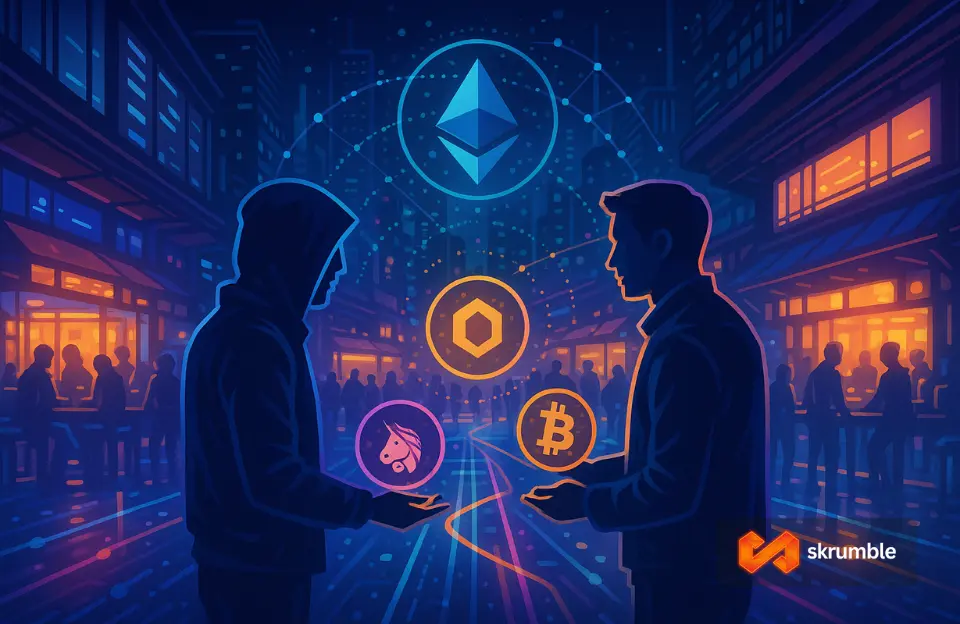
What is a crypto wallet? A crypto wallet does not hold your cryptocurrency. It holds the private keys that prove ownership of crypto recorded on a blockchain. Your actual coins live on the blockchain; the wallet is the cryptographic instrument that lets you sign transactions and move them. The 2026 wallet landscape has five distinct categories: hardware wallets (Ledger Flex, Trezor Safe 5) keep keys offline on dedicated devices; hot software wallets (MetaMask, Phantom, Rabby) run on internet-connected phones or browsers; MPC wallets (ZenGo, Fireblocks) split keys into encrypted shares stored across multiple devices; smart-contract wallets (Gnosis Safe) enforce multisig rules on-chain; and custodial wallets (Coinbase, Binance) put the exchange in control of the keys. The December 2024 Ledger Connect Kit supply-chain attack and the February 2025 Safe-developer-laptop incident defined the 2025-2026 security narrative: even audited wallets have software-supply-chain attack surfaces beyond the wallet device itself.
This guide answers what a user new to crypto actually needs about what is a crypto wallet in 2026: how the keys-not-coins mental model works, the five wallet categories and what differentiates them mechanically, the security tradeoffs that drive the choice, the practical decision tree for picking a wallet, seed-phrase and recovery hygiene, and an honest risk inventory including the recent supply-chain incidents. Every figure is sourced to a primary citation in the footer.
What is a crypto wallet in 2026?
A crypto wallet is a piece of software, hardware, or both that manages cryptographic keys for one or more blockchains. Foundational specs are documented at bitcoin.org and ethereum.org/wallets; wallet audit and verification data is published at walletscrutiny.com. The defining mental model: your crypto does not live in the wallet. Your crypto lives on the blockchain. The wallet holds the private keys that prove ownership and let you sign transactions. Sending crypto from your wallet is technically signing a transaction with the private key; the blockchain accepts the signed transaction and updates the ledger.
This distinction matters because it explains why losing access to the wallet is recoverable in some designs and unrecoverable in others. If you have the keys (or the seed phrase that derives them), you can restore the wallet on any compatible software. If you lose the keys and have no backup, the crypto on the blockchain remains there forever but is unspendable, on-chain analysis estimates 3-4 million BTC are permanently lost this way.
The 2026 landscape has five distinct wallet categories with different trust models, recovery mechanics, and security tradeoffs. Picking the right category is more important than picking a specific product within a category. For broader context on how wallets fit in the on-chain economy, see our DeFi pillar guide.
What are the five types of crypto wallets?
| Type | Key storage | Examples | Best for |
|---|---|---|---|
| Hardware | Offline secure element on dedicated device | Ledger Flex, Ledger Stax, Trezor Safe 5, BitBox02, Coldcard | Long-term cold storage, $1,000+ holdings |
| Hot software | On internet-connected device (phone or browser) | MetaMask, Phantom, Rabby, Frame, Trust Wallet, Exodus | Active DeFi use, daily trading, small operational balances |
| MPC | Encrypted key shares split across devices | ZenGo, Fireblocks, Fordefi, Liminal | Institutional treasury, users who reject seed-phrase model |
| Smart-contract multisig | On-chain contract with multiple signer accounts | Gnosis Safe, Argent | DAO treasuries, joint accounts, shared custody |
| Custodial | Exchange or service holds the keys | Coinbase, Binance, Kraken accounts | Beginners, small balances, active CEX trading |
The categories sit on a spectrum from maximum self-custody (hardware wallet with seed-phrase backup) to maximum convenience (custodial exchange wallet). The trade-off is real and consistent: more self-custody means more responsibility for security; more convenience means more counterparty risk.
How does a hardware wallet work?
A hardware wallet is a dedicated physical device that holds the private keys in an offline secure element chip. Transactions are constructed on a connected computer or phone, sent to the hardware device for signing, and broadcast back through the connected software. The private keys never leave the secure element; the connected device never sees them.
The 2026 hardware market leaders:
- Ledger Flex and Ledger Stax. EAL6+ certified secure element chip. E-ink touchscreen. Bluetooth and USB connectivity. Support for 5,500+ assets via Ledger Live and external wallets. Closed-source firmware on the secure element; open-source on supporting libraries. Ledger's product line is the largest by units shipped.
- Trezor Safe 5. Color touchscreen, open-source firmware (the central Trezor differentiator), supports 9,000+ assets via Trezor Suite and external wallets. EAL6+ secure element.
- BitBox02 (Shift Crypto). Swiss-engineered, 1,500+ supported coins, secure-element chip, optional dual-chip second-source verification.
- Coldcard. Bitcoin-only by design, air-gapped operation via SD card, fully offline signing without USB or Bluetooth.
The December 2024 Ledger Connect Kit attack matters here. Attackers compromised a Ledger npm package and injected drainer code into web pages using Ledger's connection library, costing users approximately $600,000. The underlying hardware was not compromised; the JavaScript supply chain was. The lesson is that hardware-wallet security depends on the connected software ecosystem, not just the device. Verify transactions on the device screen before approving, never trust a connected computer alone.
How does a hot software wallet work?
A hot software wallet runs on an internet-connected device (a phone, a browser, or a desktop application) and stores the private keys in encrypted local storage protected by a password or device-level biometrics. The convenience advantage is speed: transactions sign and broadcast in seconds, dApp connections are native, and recovery is straightforward via seed phrase.
The 2026 hot wallet leaders by category:
- MetaMask. Browser extension and mobile app for Ethereum and EVM-compatible chains. Approximately 30 million monthly active users. The 2026 release added Transaction Shield, an AI-powered simulation layer that warns users about malicious contracts before signing.
- Phantom. The dominant Solana wallet; expanded to Ethereum and Bitcoin in 2025. Multichain support with a clean UX.
- Rabby. Built by the DeBank team; focused on power-user DeFi with deep transaction simulation and security checks. Open-source.
- Frame. Desktop-native wallet with strong support for hardware-wallet pairing and advanced security features.
- Trust Wallet (Binance). Mobile-first multichain wallet acquired by Binance; broad asset support including non-EVM chains.
- Exodus. Desktop and mobile multichain wallet with a polished consumer UX and built-in exchange.
The honest 2026 framing of hot wallets: they are the right tool for active DeFi participation, daily trading, and small operational balances. They are not the right tool for storing large long-term holdings. The general rule: keep an operational balance in a hot wallet (typically less than 5% of total crypto holdings) and a strategic balance in cold storage.
What is an MPC wallet?
MPC (Multi-Party Computation) wallets eliminate the seed phrase by splitting the private key into multiple encrypted shares stored across different devices or parties. No single device ever holds the complete key; signing a transaction requires the shares to participate in a cryptographic protocol that produces a valid signature without ever reconstructing the key.
The trust model is different from the seed-phrase model. With a seed phrase, possession of the phrase equals control of the funds. With MPC, an attacker has to compromise multiple key shares simultaneously, typically across different devices, different cloud providers, or different parties, to gain control. The single-point-of-failure that seed phrases represent is structurally removed.
The 2026 MPC wallet leaders:
- ZenGo. Consumer MPC wallet that pioneered the keyless model. Multichain, biometric-secured.
- Fireblocks. Institutional MPC platform with $5 trillion+ cumulative volume; the dominant infrastructure for exchanges, funds, and corporate treasuries.
- Fordefi, Liminal, Cobo MPC. Institutional MPC platforms competing with Fireblocks on specific niches.
MPC technology is expected to become a mainstream consumer-wallet security standard by late 2026. The trade-off versus hardware wallets: easier UX (no seed phrase to lose), better resistance to single-device compromise, but smart-contract risk on the MPC protocol implementation and reliance on the provider's ongoing operation.
What is a smart-contract wallet (Safe)?
A smart-contract wallet is a wallet implemented as a smart contract on-chain rather than as an externally owned account (EOA). The contract enforces rules, multisig thresholds, spending limits, recovery mechanisms, delegated signers, that are not possible with a plain private-key wallet.
Gnosis Safe is the dominant smart-contract wallet, with billions of dollars in DAO and protocol treasuries sitting in Safes across Ethereum, Polygon, Arbitrum, Optimism, Base, and most other major L1/L2s. The Safe model: users define a set of signer accounts and a threshold (for example, 3 of 5 signers required to approve a transaction). Compromise of any single signer does not compromise the wallet; an attacker needs to compromise enough signers to meet the threshold.
The February 2025 Safe security incident involved a compromised Safe-developer laptop that exposed a real attack vector in the developer-tooling supply chain. The underlying Safe smart contracts were not compromised; the team responded with hardened security processes. For deeper context on the Gnosis ecosystem including Safe's role, see our Gnosis pillar guide.
Other smart-contract wallets include Argent (consumer-focused with social recovery instead of seed phrases), Coinbase Smart Wallet (passkey-secured account abstraction), and the broader account abstraction (ERC-4337) ecosystem that lets any wallet operate as a programmable smart contract.
What is the difference between custodial and non-custodial wallets?
The custodial / non-custodial distinction is the most consequential single dimension of wallet choice. It determines whether you control the keys or whether a third party does.
- Custodial wallets. An exchange (Coinbase, Binance, Kraken) or service holds the keys on your behalf. You log in with a username and password; the service signs transactions when you instruct it to. The benefit: easy onboarding, password recovery, customer support. The risk: full counterparty exposure to the service. FTX, Celsius, and Voyager all failed in 2022 and wiped out customer funds.
- Non-custodial wallets. You hold the keys (or the seed phrase, or the MPC shares). The wallet software is just an interface; ownership of the keys equals ownership of the funds. The benefit: no counterparty risk. The risk: you bear full responsibility for security and recovery.
The 2026 industry consensus: hold operational balances on a custodial exchange if you're actively trading; move strategic holdings to non-custodial storage. "Not your keys, not your crypto" is the recurring lesson from every major exchange failure of the past decade.
How do I choose the right wallet?
The decision tree depends on what you're doing with the crypto:
- Starting out (under $1,000). A custodial exchange wallet (Coinbase, Kraken, Binance) is fine. The learning curve is shorter than self-custody, and the risk if the exchange fails is proportional to the holding size.
- Active DeFi participation. A hot software wallet (MetaMask, Rabby, Phantom for Solana) is the right tool. Keep the balance small (less than 5% of total holdings) and move strategic positions to cold storage between active sessions.
- Long-term holding ($1,000 to $50,000). A hardware wallet (Ledger Flex, Trezor Safe 5, BitBox02) is the standard tool. Back up the seed phrase on metal (Cryptosteel, Billfodl) and store in two geographically separated locations.
- Large holdings ($50,000+). A hardware wallet with multisig (Casa, Unchained Capital service) or a Gnosis Safe with hardware-wallet signers. The multisig eliminates single-device compromise as a failure mode.
- Treasury or DAO. A Gnosis Safe with named signers from the organization, ideally with hardware-wallet signers and a documented signing policy. See our Gnosis pillar for the Safe ecosystem context.
- Avoid seed phrases entirely. An MPC wallet (ZenGo for consumer; Fireblocks for institutional) trades the seed-phrase model for a multi-share approach. Verify the provider's incident response history before committing significant capital.
How do I back up and recover a wallet safely?
The seed phrase is the universal backup for most non-MPC, non-smart-contract wallets. It is a 12 or 24-word phrase that deterministically derives every private key the wallet generates. Possession of the seed phrase equals control of the funds. The backup and recovery discipline:
- Write the seed on paper or stamp it into metal. Never store the seed digitally, photographs, cloud notes, password managers, and screenshots are all attack surfaces. Metal backups (Cryptosteel, Billfodl, Trezor's official Keep Metal) survive fire and water that paper does not.
- Store in two geographically separated locations. A safe deposit box + home safe is the standard pattern. Single-location storage is vulnerable to fire, flood, and theft.
- Never enter the seed into anything other than wallet software you're confident is genuine. Phishing sites posing as wallet recovery pages are a constant attack vector.
- Test recovery before committing significant funds. Wipe the wallet, restore from the seed, verify the keys derive correctly. This is the one test that proves the backup actually works.
- For Shamir Secret Sharing (Trezor SLIP-0039). Advanced users can split the seed into multiple shares with a threshold (for example, 3 of 5 shares required). Reduces single-location-failure risk; adds operational complexity.
For smart-contract wallets (Gnosis Safe, Argent), recovery is different: the contract retains the same address; recovery means replacing a lost signer key while preserving the contract. For MPC wallets, recovery depends on the provider's specific recovery scheme; verify it works before committing significant funds.
What are the real risks of using a crypto wallet?
- Seed phrase loss. Lost seed phrase with no backup is unrecoverable. On-chain analysis estimates 3-4 million BTC are permanently lost this way.
- Phishing and clipboard attacks. Malware that swaps the destination address when you paste it is a common attack vector. Verify the receive address on the device screen before signing.
- Software-supply-chain attacks. The December 2024 Ledger Connect Kit incident showed that wallet-adjacent software can be compromised even when the hardware is not. Always verify transactions on the hardware device screen, never trust a connected computer alone.
- Smart-contract risk (smart-contract wallets). Gnosis Safe contracts have a strong audit history; Safe's underlying contracts have never been exploited. The risk surface includes developer tooling (February 2025 incident) and contract upgrade paths.
- Provider failure (MPC wallets). An MPC wallet provider that goes out of business may strand users without a recovery path. Verify provider-failure recovery before committing significant funds.
- Exchange counterparty risk (custodial wallets). The FTX (November 2022), Celsius (July 2022), and Voyager (July 2022) failures wiped out billions in customer funds. Custodial wallets have full counterparty exposure to the issuing exchange.
- Address-format errors. Bitcoin and Ethereum addresses are not interchangeable. Sending BTC to an ETH address loses the funds. Sending across networks (ERC-20 USDC to Solana USDC address) loses the funds. Always verify the network plus the address before signing.
- Social engineering. Compromised support channels, fake recovery sites, "Ledger has detected a security issue" emails, social engineering accounts for a substantial share of retail crypto loss. Treat any unsolicited contact requesting wallet access or seed phrases as a scam.
Frequently asked questions
Auto-rendered from the data contract.
Frequently asked questions
What is a crypto wallet in simple terms?
What are the five types of crypto wallets?
What is the difference between hardware and software wallets?
What is an MPC wallet?
What is a smart-contract wallet like Gnosis Safe?
What is a custodial wallet?
How do I back up my crypto wallet?
What are the risks of using a crypto wallet?
Sources
- [1]Bitcoin.org: Secure your wallet guide · Bitcoin.org · accessed
- [2]Ethereum.org: Wallets documentation · Ethereum Foundation · accessed
- [3]WalletScrutiny: Wallet verification and audit data · WalletScrutiny · accessed
- [4]Ledger Academy: Best crypto wallets 2026 comparison · Ledger Academy · accessed
More in Wallets & security
What is Account Abstraction? 2026 ERC-4337 + EIP-7702 Guide
What is account abstraction in 2026: ERC-4337 + EIP-7702 paths, gas in any token, sponsored gas, batched transactions, modular ERC-7579, and adoption stats.
How to Use MetaMask 2026: Setup, Security + Smart Accounts
How to use MetaMask in 2026: install, back up the seed phrase, add networks, use Snaps for multi-chain support, enable Smart Accounts, and avoid scams.