
How to Use Uniswap 2026: V4 Hooks, Swap + LP Guide
How to use Uniswap in 2026: V4 hooks, UniswapX MEV-protected routing, 13+ deployment chains, cross-chain swaps via Across, and the LP discipline framework.
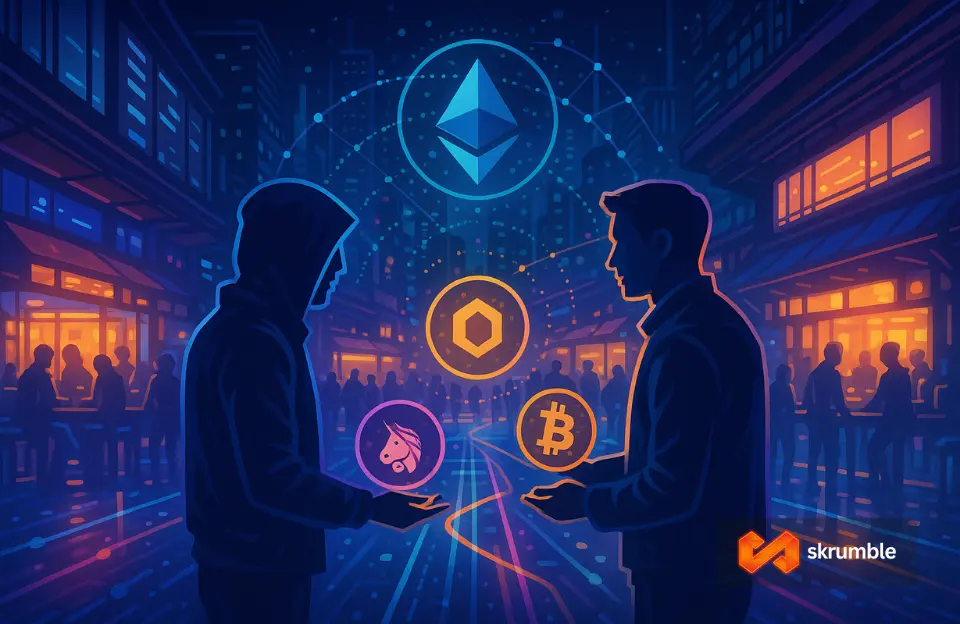
How to use Uniswap in 2026 starts with one decision: connect your wallet at app.uniswap.org, set tight slippage, route via UniswapX for MEV-protected execution, and confirm the trade on your wallet. Uniswap is the dominant decentralized exchange across the crypto ecosystem; Uniswap V4 launched on 31 January 2025 and has processed over $110 billion in cumulative trading volume in its first year of operation. V4 hosts over 2,500 custom liquidity pools, with approximately 100 new hook contracts deployed daily. The protocol operates across 13+ blockchain networks: Ethereum mainnet plus all major EVM L2s (Arbitrum, Base, Optimism, Polygon, BNB Chain, Avalanche, World Chain, and others). Cross-chain swaps via Across Protocol integration cover nine EVM-compatible networks directly from the Uniswap interface. The honest 2026 framing: Uniswap UX is materially harder than centralized-exchange UX (slippage management, MEV protection, gas, approval flows) but offers unrestricted token access, full self-custody, and native composability with the rest of DeFi. UniswapX (the MEV-protected aggregation layer) and V4 async-swap hooks meaningfully closed the UX gap during 2025-2026.
This Uniswap tutorial walks the swap flow (connect wallet, select tokens, manage slippage, MEV protection, execute), the V4 hook architecture, liquidity provision basics, the cross-chain swap option, fee economics, the honest risk landscape, and how to use Uniswap on L2s for sub-cent gas costs. For broader DEX context, see our DEX pillar guide; for the wallet setup, see how to use MetaMask.
What is Uniswap?
Uniswap is the largest decentralized exchange (DEX) by both cumulative trading volume and active liquidity. The protocol launched on Ethereum mainnet in November 2018; Uniswap V2 (May 2020) popularized the constant-product AMM model that became the DeFi standard. V3 (May 2021) introduced concentrated liquidity, materially improving capital efficiency for liquidity providers. V4 (January 2025) added hooks: custom smart-contract logic that runs at defined points in pool operations (before/after swap, before/after liquidity changes).
The 2026 protocol footprint: 13+ blockchain networks, $110+ billion cumulative V4 volume in the first 12 months, approximately 2,500 custom liquidity pools spanning hook-enabled designs. The UNI governance token (issued via the September 2020 retroactive airdrop) controls protocol parameters via the Uniswap DAO. The dominant UX: web app at app.uniswap.org, mobile app for iOS and Android, and any wallet's "swap" feature that routes through Uniswap as a backend (MetaMask, Phantom for Ethereum-side activity, Coinbase Wallet, Rabby).
How do I do a basic swap on Uniswap?
The standard five-step flow.
- Connect your wallet. Go to app.uniswap.org and click "Connect Wallet." Select MetaMask, Coinbase Wallet, WalletConnect, or any other supported wallet. Verify the wallet prompt shows the correct site (phishing fakes exist; uniswap.org with no subdomain is canonical).
- Choose source and destination tokens. Click the token picker to select the asset you want to swap from, then the asset you want to swap to. Uniswap searches by name, ticker, or contract address; verify the contract address against an authoritative source for less-common tokens to avoid phishing-token scams.
- Enter the amount and review the quote. Uniswap displays the expected output, the price impact (your trade's effect on pool price), the route (which pools the trade routes through), and the estimated gas cost. Higher amounts produce higher price impact; consider splitting very large trades.
- Set slippage tolerance. Click the settings gear and review slippage tolerance (default 0.5%). For liquid pairs on Ethereum mainnet, 0.3-0.5% is appropriate. For larger trades or volatile pairs, 0.5-1%. Higher slippage tolerance enables sandwich attacks; tighter is better for MEV defense.
- Confirm in your wallet. Click Swap; the wallet prompts you to sign the transaction. Review the transaction details in your wallet (especially the destination contract address and approved amount). Confirm. The swap typically settles within seconds on L2s; 12-30 seconds on Ethereum mainnet depending on gas price.
For first-time swaps, the wallet may require a separate "approval" transaction before the swap itself: this grants Uniswap permission to spend the source token from your wallet. Modern wallets bundle approval and swap into a single signature when EIP-2612 (permit) signatures are supported. The user pays gas for the approval transaction once per token per chain.
What is UniswapX and how does it protect against MEV?
UniswapX is the MEV-protected routing layer Uniswap launched in 2023 and expanded through 2024-2026. The architecture: the user signs an off-chain order describing what they want to receive; professional fillers (market makers, MEV searchers) compete to fill the order at the best available price. The winning filler executes the trade and pays the user the agreed amount, taking the difference as profit. The user never broadcasts the trade to the public mempool, so sandwich attacks become economically impossible.
UniswapX advantages: better execution price on most trades (fillers compete; the winning filler's bid is typically tighter than public-mempool DEX execution), MEV protection by default (no mempool exposure), and aggregated liquidity from both on-chain and off-chain sources. The trade-off: the user signs an off-chain order rather than directly executing a transaction, which is a slightly different mental model and requires fillers to be operational. UniswapX is now the default routing path on the Uniswap web app for supported pairs; the user does not need to opt in explicitly. For broader MEV context, see our what is MEV guide.
What are Uniswap V4 hooks?
V4 hooks are smart-contract plugins that customize pool behavior at defined lifecycle points: before swap, after swap, before adding liquidity, after adding liquidity, before removing liquidity, after removing liquidity. The canonical specification lives at docs.uniswap.org/contracts/v4/concepts/hooks. The hook contract can implement arbitrary logic, opening pool designs to: dynamic fees (fee adjusts based on volatility or pool state), limit orders (queued orders that execute when price reaches the target), custom oracles, auto-compounding (LP rewards reinvested without user transactions), and MEV protection mechanisms (async swaps, app-specific sequencing).
The 2026 hook ecosystem: approximately 100 new hooks deployed daily, totaling over 2,500 custom liquidity pools. Notable hook protocols include Angstrom by Sorella Labs (App-Specific Sequencer for MEV protection and LP-reward auction of ordering rights), various dynamic-fee hooks that adjust pricing based on volatility, and limit-order hooks that bring CEX-style order types to AMM pools. The user experience for most retail trades does not change with V4; the hook ecosystem matters most for LPs and active traders selecting specific pool designs.
How do I provide liquidity on Uniswap?
Three liquidity-provision routes in 2026. Standard V3-style concentrated liquidity: deposit two tokens within a price range you choose; earn pool fees proportional to your share of liquidity while price stays in range. Active management is required because price moving outside your range converts the position to the underperforming asset and stops earning fees. V4 hook-enabled pools: same concentrated-liquidity mechanic plus whatever the hook adds (dynamic fees, auto-compounding, etc.). Pool selection becomes part of the LP strategy. Single-sided provision via certain hooks: some V4 hook designs accept single-asset deposits and handle the conversion internally; less common but emerging.
The honest LP economics: Uniswap V3 LP performance data shows approximately 49.5% of LP wallets ended in net negative position relative to a hold-and-do-nothing benchmark per a Bancor and IntoTheBlock study. Active range management improves outcomes materially; passive deposits in volatile pairs frequently lose to impermanent loss. For the full LP-risk education, see our impermanent loss guide; for broader yield-strategy context, see yield farming.
How do I swap across chains on Uniswap?
The 2026 Uniswap interface supports cross-chain swaps via Across Protocol integration across nine EVM-compatible networks. The flow: select source chain and token; select destination chain and token (across the supported set); UniswapX cross-chain routing finds the optimal path combining a swap on the source chain, a bridge transfer to the destination chain, and (if needed) a swap on the destination chain; the user signs once and the routing executes the complete path. Total settlement time: typically 30 seconds to 5 minutes depending on bridge throughput.
The cross-chain fee structure: source-chain swap fees + bridge fees (Across quoted 0.011% to move 1,000 USDC from Ethereum to Arbitrum on 9 October 2026) + destination-chain swap fees. For broader cross-chain context, see our how to bridge crypto guide.
What fees does Uniswap charge?
Three fee layers. Pool fees: the fee paid to liquidity providers for each swap. Standard tiers on V3 and V4: 0.05% (stablecoin-stablecoin pools), 0.3% (most pairs), 1% (exotic or low-liquidity pairs). V4 hook-enabled pools can implement custom fee tiers and dynamic fees adjusting based on pool state. Protocol fee (since the 2025 UNIfication proposal): a portion of pool fees flows to the Uniswap protocol treasury and UNI staking rewards. Web-app fee: the Uniswap web app charges 0.25% on swaps routed through it (separate from pool fees) to fund operational and development costs.
For users who want to avoid the web-app fee, direct contract interaction via wallets like Rabby or via the Uniswap Trading API removes the 0.25% web-app overlay. Trade execution is otherwise identical; only the routing overhead differs. The combined fee structure for a typical trade through the web app: approximately 0.3% pool fee + 0.25% web-app fee = ~0.55% total. For frequent traders or larger trades, this is materially more than the Pro-tier fees on centralized exchanges (0.1-0.5%); for occasional swaps with the convenience of self-custody, the cost difference is acceptable.
What are the risks of using Uniswap?
Five risk classes. Smart-contract risk: the Uniswap V4 contracts have extensive audit coverage (OpenZeppelin, Trail of Bits, Spearbit, and others) but no production smart contract is provably bug-free. Hook risk: V4 hooks are third-party smart contracts; a malicious or buggy hook can lose user funds even if the core Uniswap contracts are sound. Stick to hooks from established teams or verified audit reports. Token approval risk: granting Uniswap unlimited approval to spend a token in your wallet creates standing exposure if the contract is later exploited; Revoke.cash manages stale approvals.
Phishing-token risk: tokens with names matching real assets but malicious contract addresses circulate continuously; verify contract addresses against trustworthy sources (CoinGecko, the project's official site) before swapping into a new token. MEV risk on non-UniswapX routes: legacy V3 routing exposes trades to public-mempool sandwich attacks. Use the default UniswapX routing on the web app to mitigate. The 2026 honest framing: Uniswap is the most-audited, most-battle-tested DEX in crypto; risk is real but materially lower than smaller competing DEXes.
Frequently asked questions
Is Uniswap safe to use?
Uniswap V4 has extensive audit coverage and processed $110+ billion in volume during its first year without protocol-level exploits. The contract architecture is among the most-reviewed in DeFi. Risk areas: third-party hook contracts (verify hook provenance), token approvals (use revoke.cash to manage), and phishing-token scams (verify token contract addresses). For typical retail swaps on mainstream tokens via the official Uniswap web app, the practical safety is high.
What is the difference between Uniswap V3 and V4?
V3 introduced concentrated liquidity (LPs choose a price range; capital deploys only within that range, materially improving capital efficiency). V4 added hooks: smart-contract plugins that customize pool behavior at defined lifecycle points, enabling limit orders, dynamic fees, custom oracles, auto-compounding, and MEV-protection mechanisms. V4 also reduced gas costs by approximately 99% for some flows through a singleton pool architecture and other optimizations.
How much does it cost to use Uniswap?
Typical 2026 swap cost: 0.3% pool fee + 0.25% web-app fee = ~0.55% on Ethereum mainnet + gas fees ($1-$20 depending on congestion). On L2s (Arbitrum, Base, Optimism, Polygon), gas costs drop to $0.01-$0.50. For comparison, centralized exchanges charge 0.1-0.6% in trading fees. Uniswap is competitive on L2s and slightly more expensive on mainnet for the convenience of self-custody.
Can I use Uniswap on L2?
Yes, on all major Ethereum L2s including Arbitrum, Base, Optimism, Polygon, BNB Chain, Avalanche, World Chain, and Scroll. Bridge ETH or stablecoins to the L2 first via Across or the L2's native bridge (we compare them in our ranking of crypto bridges); then use Uniswap on that L2 with materially lower gas costs. The Uniswap web app automatically detects the connected network and shows the relevant pools.
How do I avoid MEV on Uniswap?
Use UniswapX routing (default on the web app for supported pairs); submit transactions via private mempools (MEV Blocker, 1inch Fusion, CowSwap as alternatives); set tight slippage tolerance (0.1-0.5%); avoid trading large amounts on illiquid pools where sandwich opportunities are largest. For broader MEV-defense detail, see our MEV guide.
What is the UNI token used for?
UNI is the Uniswap protocol governance token. Holders can vote on protocol upgrades, fee parameter changes, and treasury allocations via the Uniswap DAO. Since the 2025 UNIfication proposal, a portion of protocol fees flows to UNI staking rewards. UNI trades as an independent cryptocurrency on major exchanges with a market cap typically in the top 50 by total value. The original UNI distribution (September 2020) airdropped 400 UNI to every wallet that had interacted with Uniswap before September 1, 2020.
Can I cancel a Uniswap swap once submitted?
On the public mempool, technically yes by submitting a higher-gas cancel transaction before the original mines; in practice this rarely works because front-running bots react faster than retail users. On UniswapX, orders can be canceled by the user before a filler accepts them. Once filled or executed, the swap is final.
How is Uniswap taxed in the USA?
Every swap is a taxable event. Selling Token A for Token B realizes capital gain or loss on the Token A side based on the difference between cost basis and FMV at swap time. Token B receives a new cost basis equal to its FMV at swap time. The web-app fee paid to Uniswap is a transaction cost that affects realized PnL but is not a separate deductible item for most users. For broader US treatment, see our crypto tax USA 2026 guide.
Frequently asked questions
Is Uniswap safe to use?
What is the difference between Uniswap V3 and V4?
How much does it cost to use Uniswap?
Can I use Uniswap on L2?
How do I avoid MEV on Uniswap?
What is the UNI token used for?
Can I cancel a Uniswap swap once submitted?
How is Uniswap taxed in the USA?
Sources
- [1]Uniswap: Official web app · Uniswap Labs · accessed
- [2]Uniswap V4: Hooks documentation · Uniswap Labs · accessed
- [3]Revoke.cash: Token approval management · Revoke.cash · accessed
More in DeFi
What is DeFi? 2026 Decentralized Finance Guide
What is DeFi? Decentralized finance in 2026: $95-140B TVL, Aave + Lido lead, MiCA-regulated stablecoins, BTC/ETH collateral, institutional adoption.
What is MEV? 2026 Maximal Extractable Value Guide + Data
What is MEV (Maximal Extractable Value) in 2026: $7.2B extracted since 2020, MEV-Boost mechanics, sandwich attacks, Solana Jito redistribution, and protections.
What is an Oracle in Crypto? 2026 Chainlink + Pyth Guide
What is a blockchain oracle in 2026: Chainlink secures $32B TVS at 83.7% market share, Pyth Network pull model, oracle attacks (Mango, BonqDAO, Polter), defense.
What is Yield Farming? 2026 DeFi Yield Guide
What is yield farming? Five strategy types in 2026, realistic 3-25% APYs, impermanent loss explained (54.7% of volatile-pair LPs lose money), honest risks.
What is DeFi Lending? 2026 Guide to Aave, Morpho + Spark
What is DeFi lending in 2026: $55.69B TVL, Aave at $26B ATH, Morpho Blue $4.9B, Spark $6.8B. Overcollateralization, liquidation, oracle risk, and US taxes.
What is Impermanent Loss? 2026 LP Risk Guide + Real Data
What is impermanent loss in 2026: ~49.5% of Uniswap V3 LPs net negative per Bancor/IntoTheBlock study, with math, hedging strategies, and IL insurance review.